In the construction and woodworking industries, choosing the right type of nail is important for improving work efficiency and ensuring strong connections. Among many types of fasteners, coil nails have become a popular choice because of the loading capacity, fast installation speed and wide range of applications.
This article will introduce what coil nails are, their features, common applications and widely usage.
What Are Coil Nails?
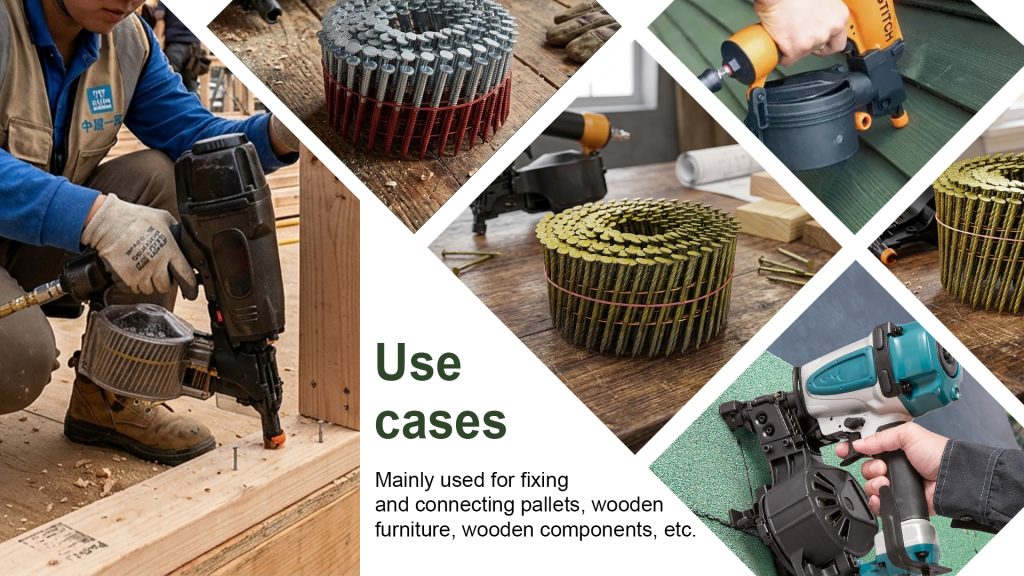
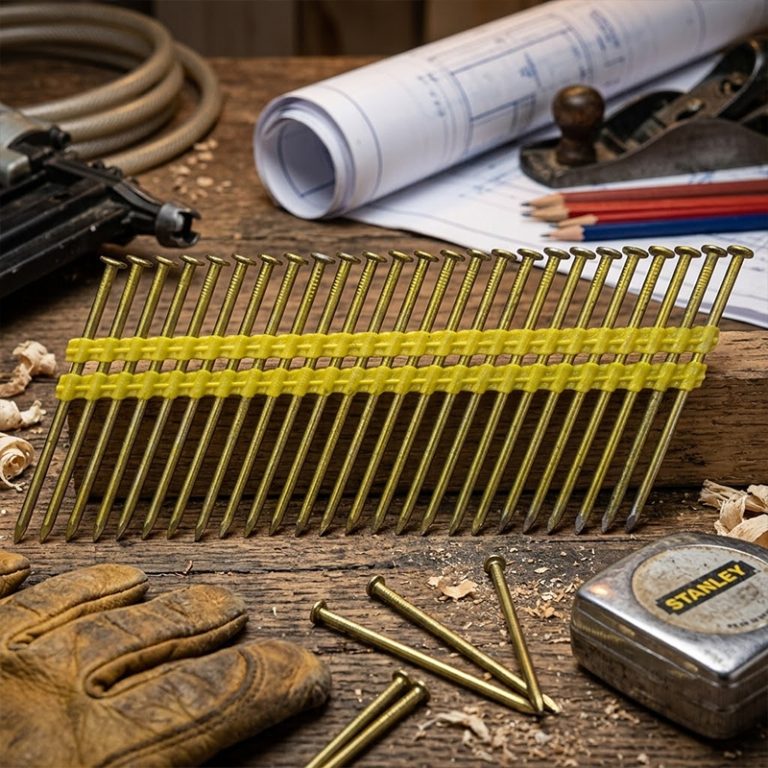
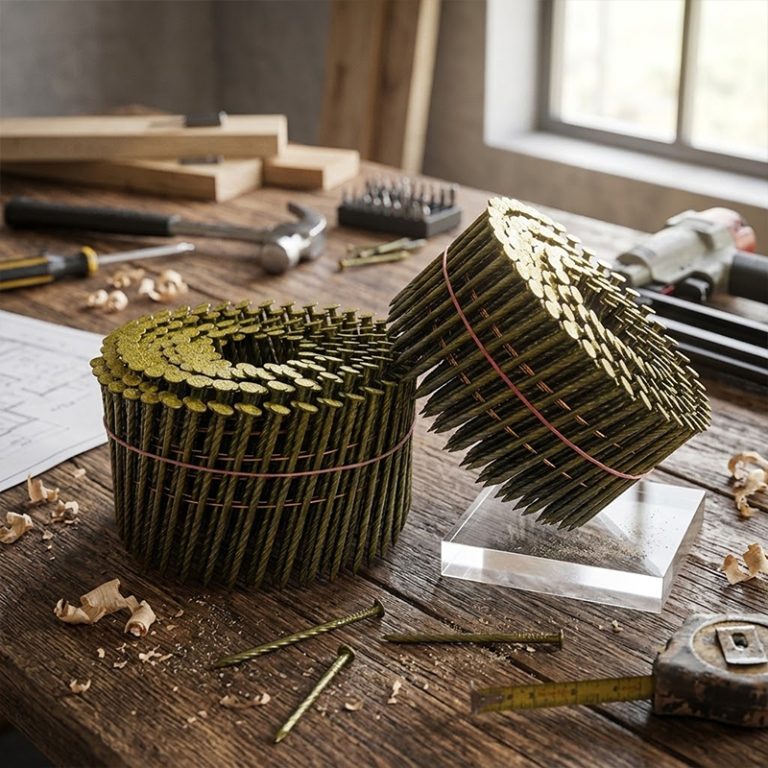
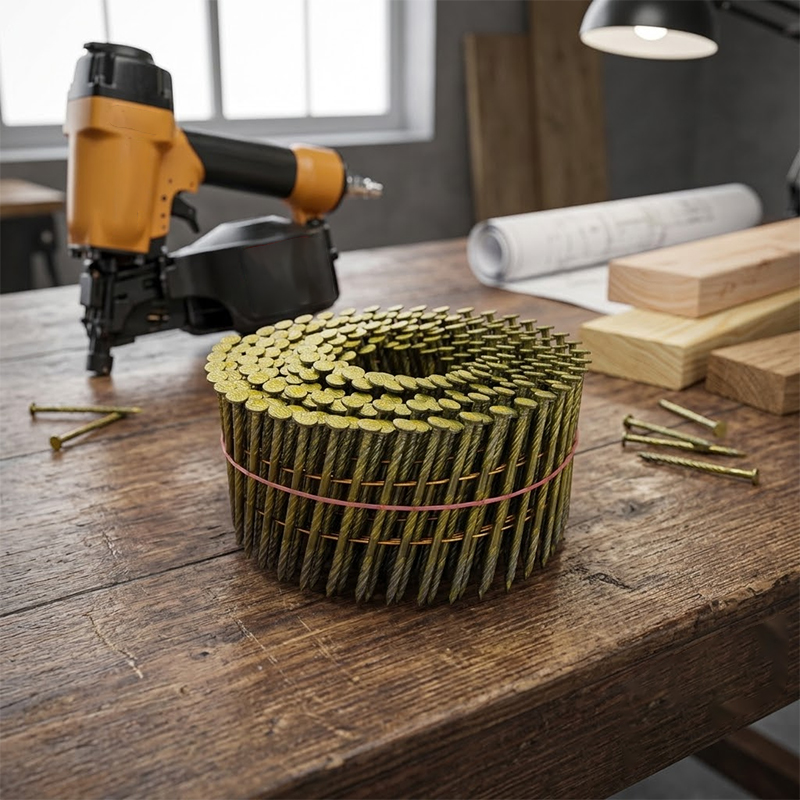
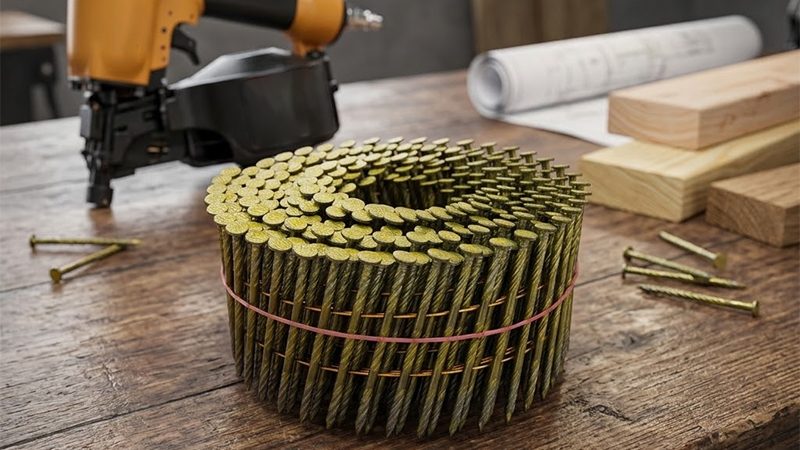
Coil nails are a type of nail that is connected together in a continuous coil shape. Unlike traditional loose nails, coil nails are designed to be used with pneumatic coil nail guns, allowing workers to install a large number of nails quickly and efficiently.
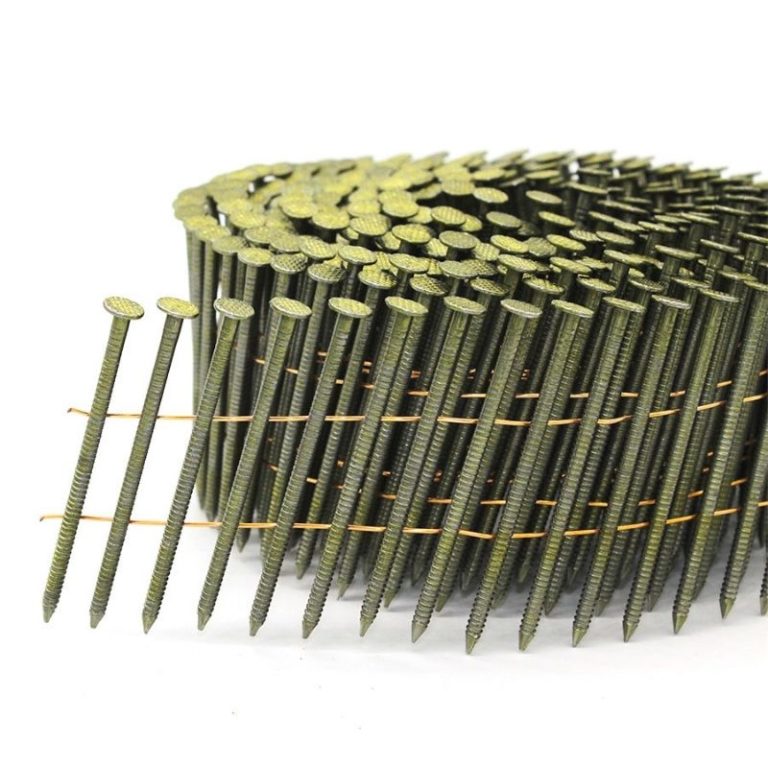
The nails are usually arranged in a roll and held together by steel wire. When loaded into a coil nail gun, the tool can automatically feed and drive the nails into the wood material, this will greatly reduce the labor time and improving productivity.
Main Features of Coil Nails
1. High Working Efficiency
One of the biggest advantages of coil nails is their fast installation speed. By input into automatic nail guns, workers can complete large fastening projects in a shorter time.
This makes coil nails especially suitable for wood construction projects, pallet manufacturing, fencing, and other applications that require frequent nailing.
2. Strong Holding Power
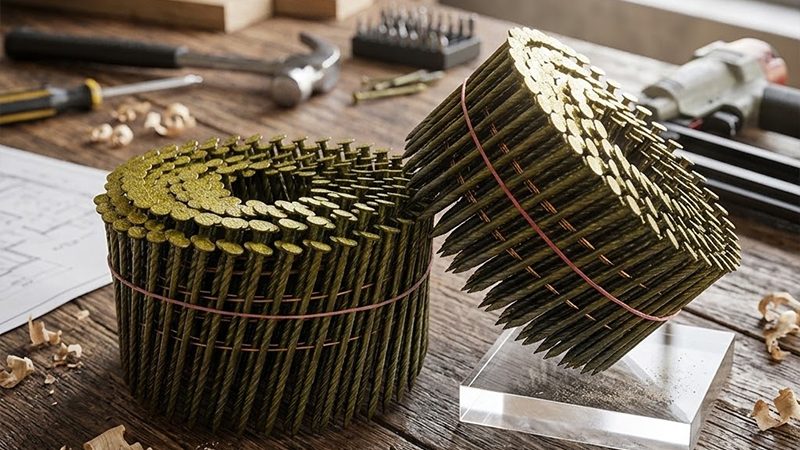
Coil nails are available with different shank designs, including smooth shank, spiral shank, and ring shank. Among them, spiral shank and ring shank nails provide stronger grip because the special surface design increases friction between the nail and the material.
These designs help improve pull-out resistance and create a more secure connection.
3. Different Surface Treatments
To meet different working environments, coil nails can be produced with various surface treatments. Popular ones are polished, electric galvanized , hot deep galvanized and vinyl coated ones.
4. Wide Range of Sizes and Applications
Coil nails are available in different lengths, diameters, and shank types to meet different requirements. Whether for light woodworking projects or heavy-duty construction work fields, there is a suitable coil nail option.
Common Applications of Coil Nails
Coil nails are widely used in many industries due to their convenience and reliable performance.
Construction Industry
In construction projects, coil nails are commonly used for wood framing, roofing, siding, and other structural applications. Their strong holding power makes them suitable for fixing wooden components securely.
Pallet and Wooden Packaging Manufacturing
Wooden pallets and packaging boxes require thousands of nails during production. Coil nails help manufacturers improve production efficiency while maintaining strong and stable connections.
Fencing and Outdoor Projects
For wooden fences, garden structures, and outdoor woodworking projects, coil nails with corrosion-resistant coatings are a practical choice because they can handle changing weather conditions.
Furniture and Woodworking
Coil nails are also used in furniture production and woodworking workshops where fast and consistent fastening is needed.
Why Choose Coil Nails?
Compared with ordinary nails, coil nails offer several advantages:
- Faster installation with pneumatic nail guns
- Stronger fastening performance with spiral or ring shank designs
- Reduced labor costs and improved productivity
- Available in different sizes and surface treatments
- Suitable for various industrial and construction applications
These benefits make coil nails an essential fastening product for many professional users.
How to Choose the Right Coil Nails?
When selecting coil nails, buyers should consider several factors:
1. Material and Application
Different projects require different nail specifications. For example, construction applications may need stronger nails, while woodworking projects may require smaller sizes.
2. Shank Type
Spiral shank and ring shank coil nails are recommended for applications where stronger holding force is needed.
3. Surface Treatment
For outdoor or moisture-exposed projects, zinc plated coil nails provide better corrosion resistance and durability.
4. Compatibility with Nail Guns
Always make sure the coil nails match the specifications of the nail gun being used, including nail length, diameter, and coil angle.
Conclusion
Coil nails are an efficient and reliable fastening solution widely used in construction, woodworking, packaging, and many other industries. With advantages such as fast installation, strong holding power, and various available options, coil nails continue to play an important role in modern hardware applications.