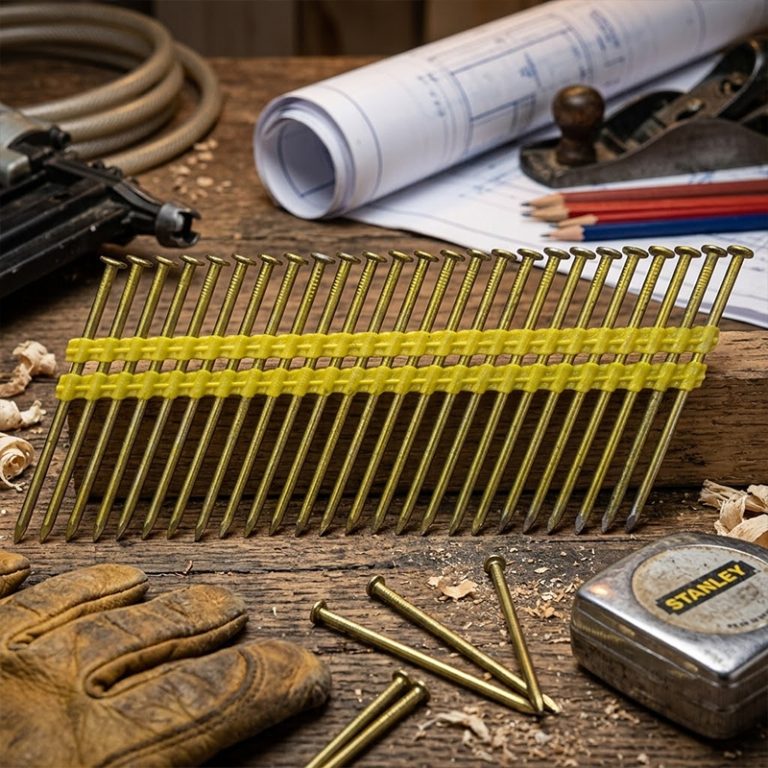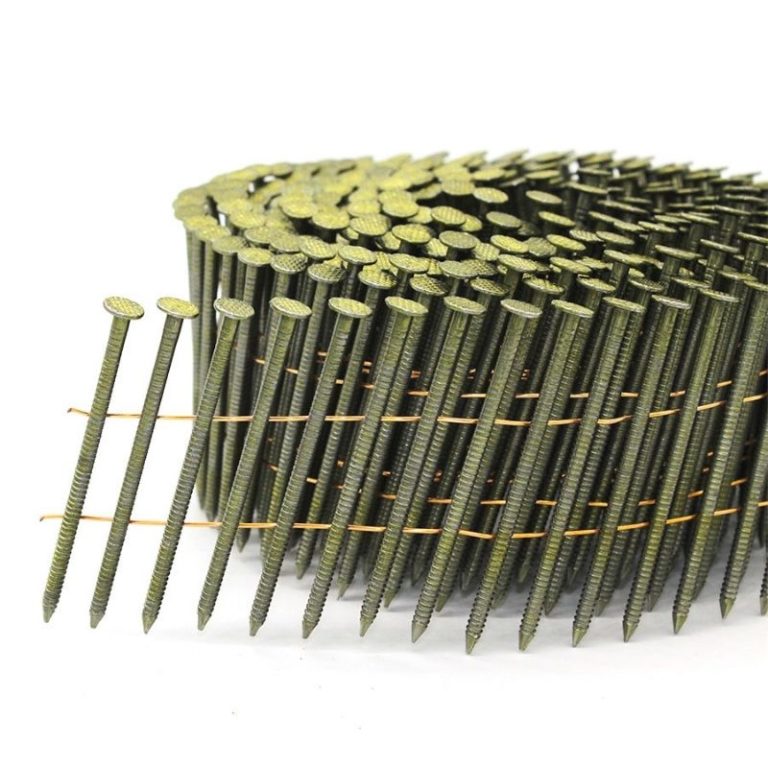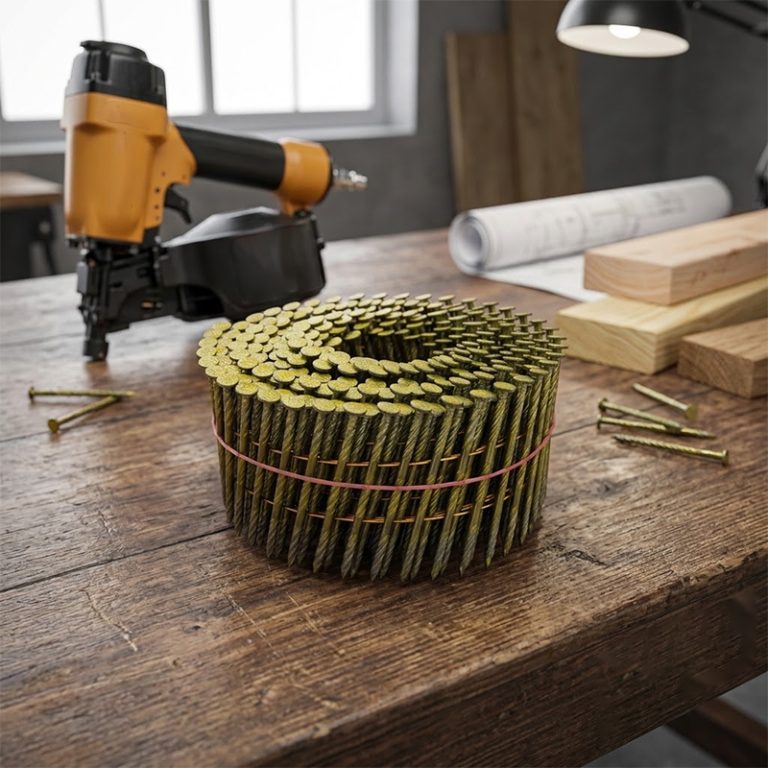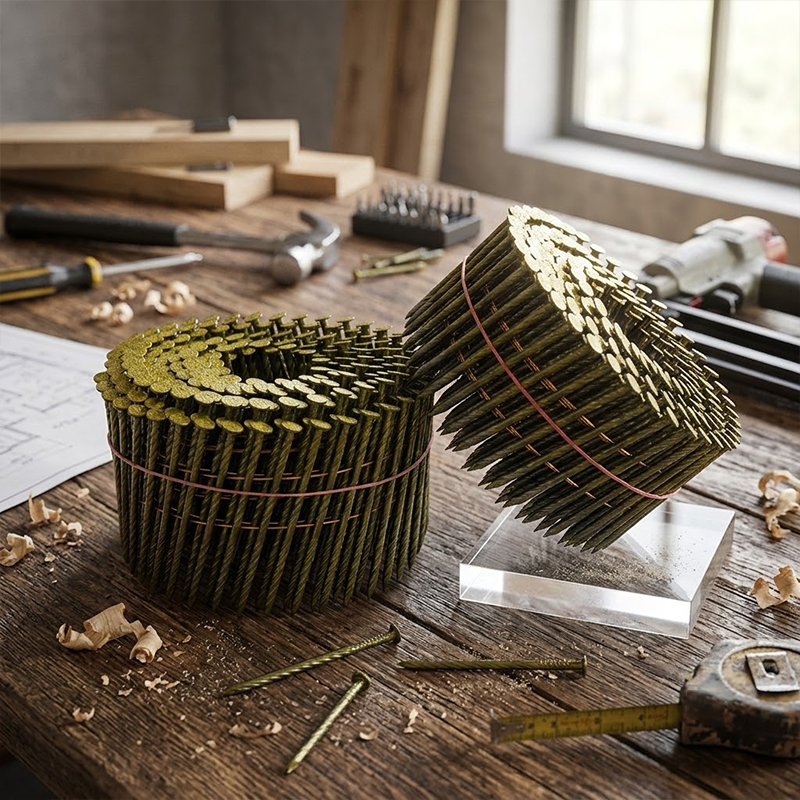
Choosing the right nails is important for achieving a strong and reliable connection. For construction, woodworking, pallet production, and other applications, coil nails are a popular choice because they can be used with pneumatic coil nail guns for fast and efficient nailing.
However, coil nails come in different sizes, shank types, and surface treatments. So, how can you choose the right coil nails for your project?
1. Choose the Right Nail Length
The first thing to consider is nail length. The nail should be long enough to provide a secure connection, but not so long that it passes completely through the material.
For example, shorter coil nails may be suitable for lighter woodworking applications, while longer nails are often used for thicker wood and construction projects.
Before ordering, check the thickness of the materials you plan to fasten and choose a suitable nail length.
2. Consider the Shank Type
The shank is the main body of the nail. Different shank designs can provide different levels of holding power.
Smooth Shank:
Smooth shank coil nails have a simple surface and are suitable for many general fastening applications.
Spiral Shank:
The spiral design can increase friction between the nail and the material, providing stronger holding power.
Ring Shank:
Ring shank nails have rings around the shank. These rings help improve resistance to pulling out and are useful when a stronger connection is required.
3. Select the Right Surface Treatment
The working environment is another important factor.
Zinc plated coil nails have a zinc coating that helps protect the nail from corrosion. They are commonly used for construction, woodworking, pallets, fencing, and other applications where better rust resistance is needed.
For indoor applications, standard surface treatments may be sufficient. For outdoor or humid environments, choosing a suitable corrosion-resistant coating can help extend the service life of the fastening.
4. Check Nail Gun Compatibility
Not every coil nail can be used with every coil nail gun.
Before purchasing, check whether the nail length, diameter, coil angle, collation type, and other specifications match your nail gun.
Using compatible nails can help ensure smooth feeding and consistent nailing performance.
5. Think About Your Application
Different projects have different fastening requirements.
For example:
- Pallet production: High-speed and reliable fastening is important.
- Woodworking: Nail size and appearance may be more important.
- Construction: Strong holding power and durability are often required.
- Outdoor projects: Corrosion resistance should be considered.
Understanding your application makes it easier to select the right coil nails.
Conclusion
Choosing the right coil nails does not have to be complicated. Start by considering the nail length, shank type, surface treatment, nail gun compatibility, and application.
The right combination can help improve fastening strength, working efficiency, and product durability.
If you are not sure which coil nails are suitable for your project, providing the material, nail gun model, required nail size, and application can help you find the right specification.