Nails play an important role in construction. From building wooden frames to installing roofing materials, workers use different types of nails to connect materials, secure structures, and complete various building tasks.
However, not all nails serve the same purpose. Some offer strong holding power for heavy-duty applications, while others work better with thinner materials or specific construction tools.
So, what are the most common types of nails used in construction? And how do you choose the right one for your project?
In this guide, we will introduce several popular construction nails, explain their main features, and explore where each type works best.
1. Common Wire Nails
Common wire nails rank among the most widely used nails in construction and woodworking. They usually feature a flat head, a straight shank, and a sharp point.
Their simple design makes them suitable for many general fastening tasks. Workers often use them to connect wooden boards, build basic frames, and assemble wooden structures.
Main Features:
- Simple and practical design
- Available in different lengths and diameters
- Suitable for general wood fastening
- Easy to use in many construction applications
Common Applications:
- Wood framing
- Wooden furniture assembly
- General carpentry
- Wooden packaging and crates
If you need a versatile nail for everyday woodworking and construction, common wire nails offer a practical choice.
2. Coil Nails
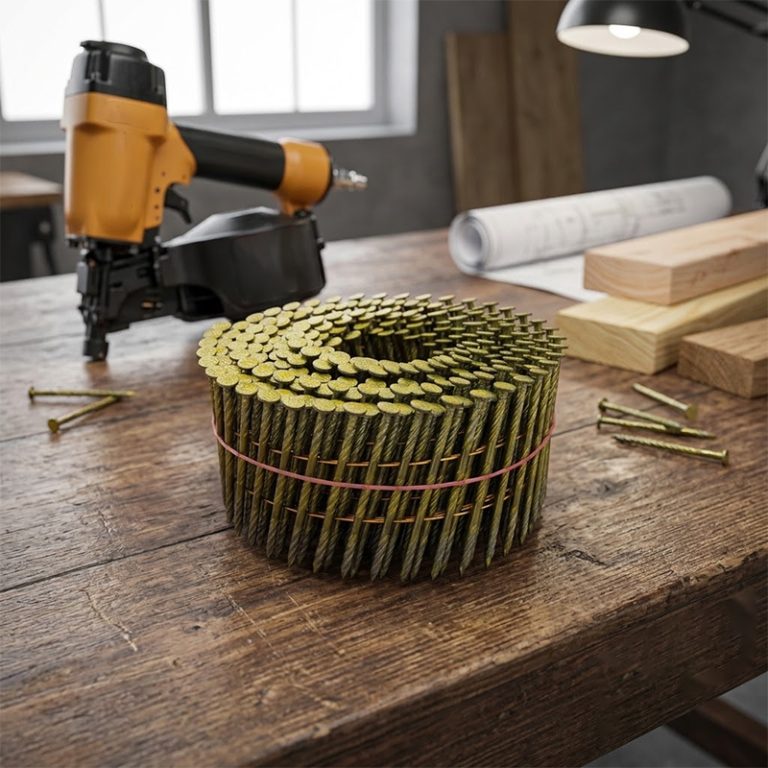
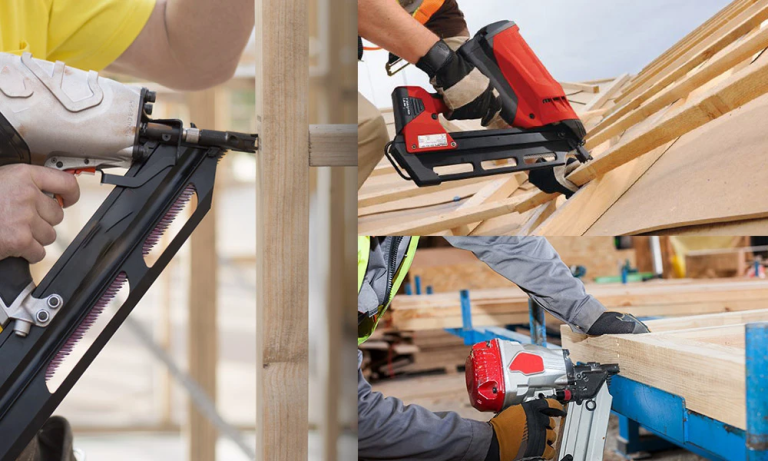
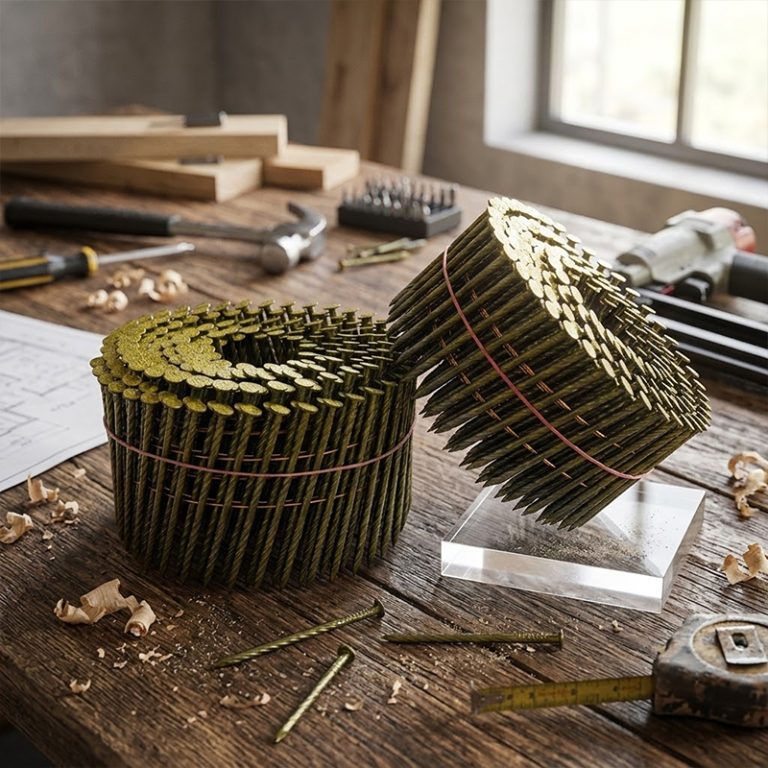
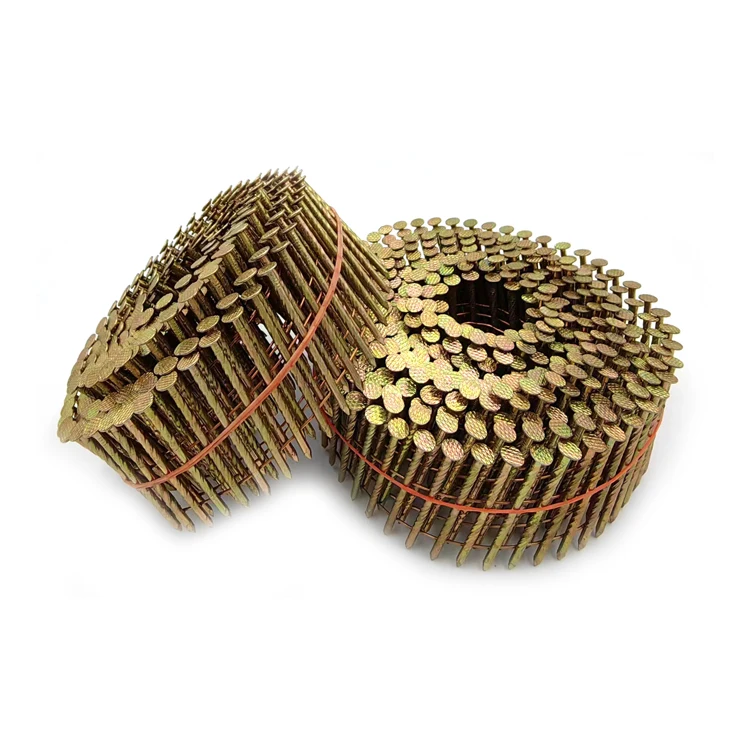
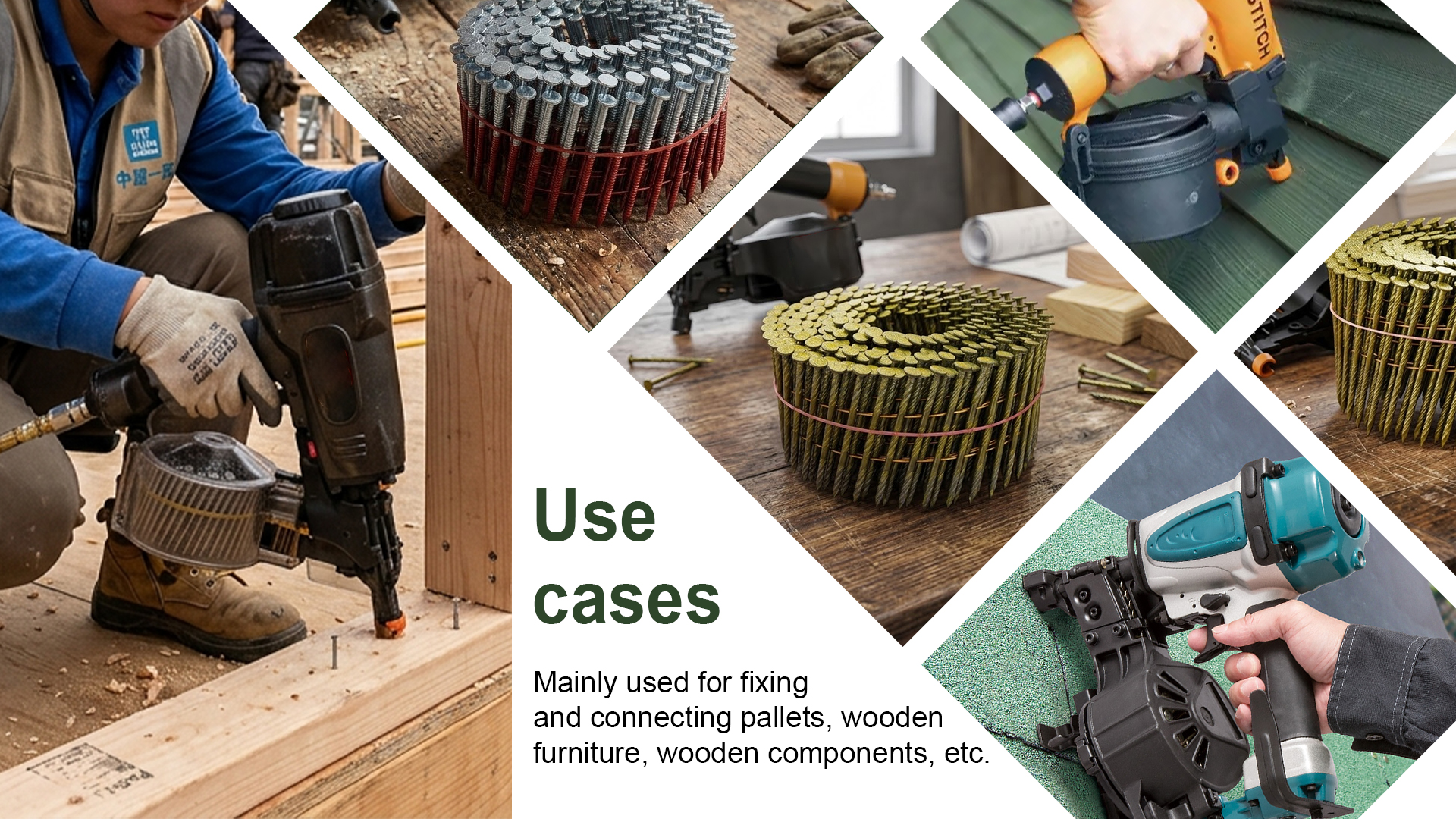
Coil nails come in connected rolls that fit into compatible pneumatic coil nail guns. Unlike loose nails, their compact arrangement allows workers to load many nails into a tool at once.
This design reduces reloading time and helps workers maintain a steady pace, especially during large projects.
Coil nails come in several shank designs:
- Smooth Shank: Offers easy penetration and works well for general fastening.
- Ring Shank: Features grooves around the nail body to improve holding power in wood.
- Screw Shank: Uses a spiral-shaped body to provide a strong grip in suitable materials.
Manufacturers also offer different surface finishes, including vinyl coating, electro-galvanizing, and hot-dip galvanizing.
Common Applications:
- Roofing installation
- Wood framing
- Pallet manufacturing
- Fencing
- Wooden crates and packaging
Coil nails suit projects that require frequent and repetitive fastening. They are particularly useful in production environments where workers want to reduce interruptions.
3. Roofing Nails
Roofing nails help secure roofing materials to wooden roof structures. Unlike ordinary wire nails, they often feature a wider, flat head that helps hold roofing materials in place.
Some roofing nails also include rubber or other sealing washers. These washers help reduce water penetration around the nail hole when the installation system requires them.
Roofing nails come in different materials, lengths, and surface finishes. Galvanized roofing nails offer corrosion protection, which matters because roofs face rain, humidity, and changing weather conditions.
Main Features:
- Wide heads for better material coverage
- Different lengths for various roofing materials
- Available with suitable corrosion-resistant finishes
- Some designs include sealing washers
Common Applications:
- Asphalt shingle installation
- Roofing felt installation
- Certain metal roofing systems
- Other roofing applications specified by manufacturers
Always check the roofing material and installation instructions before selecting a roofing nail.
4. Concrete Nails
Concrete nails have a hard, strong structure that helps them penetrate concrete, masonry, and other hard surfaces. Their design differs from ordinary wood nails because concrete and masonry require much greater penetration resistance.
Many concrete nails feature a hardened steel body and a sharp or specially shaped point. Some designs also use fluted shanks to improve grip in masonry.
Main Features:
- Hardened steel construction
- Strong resistance to bending during suitable installation
- Designed for concrete or masonry applications
- Different lengths and shank designs
Common Applications:
- Attaching wood strips to masonry
- Securing selected fixtures to concrete
- Light construction and renovation work
Keep in mind that concrete nails do not replace masonry anchors or screws in every situation. For heavy loads or critical structu