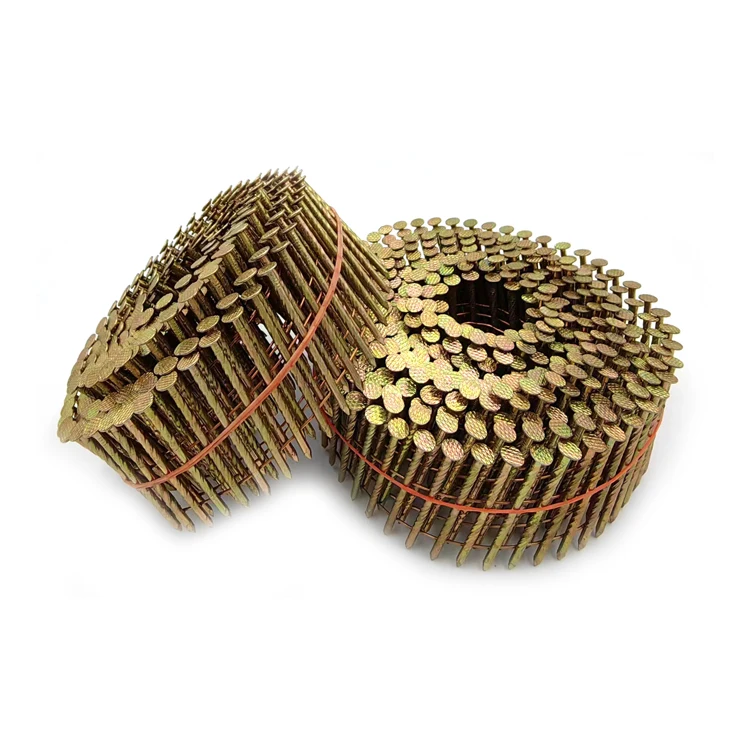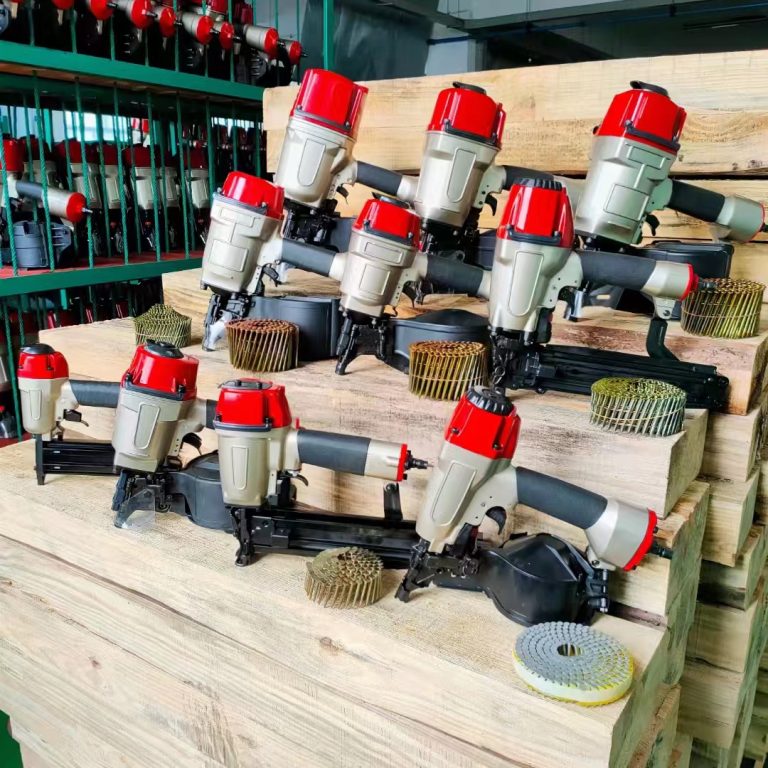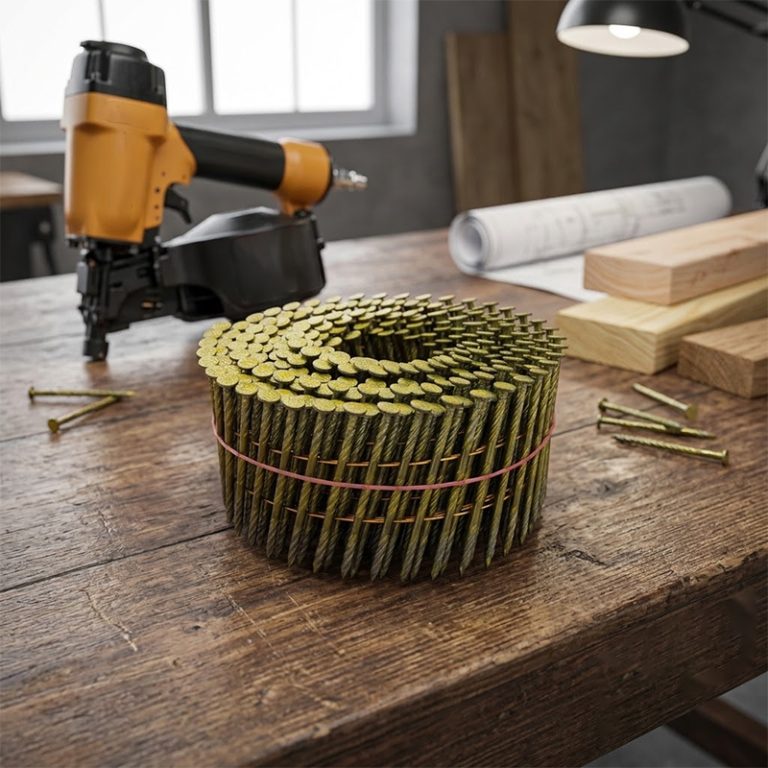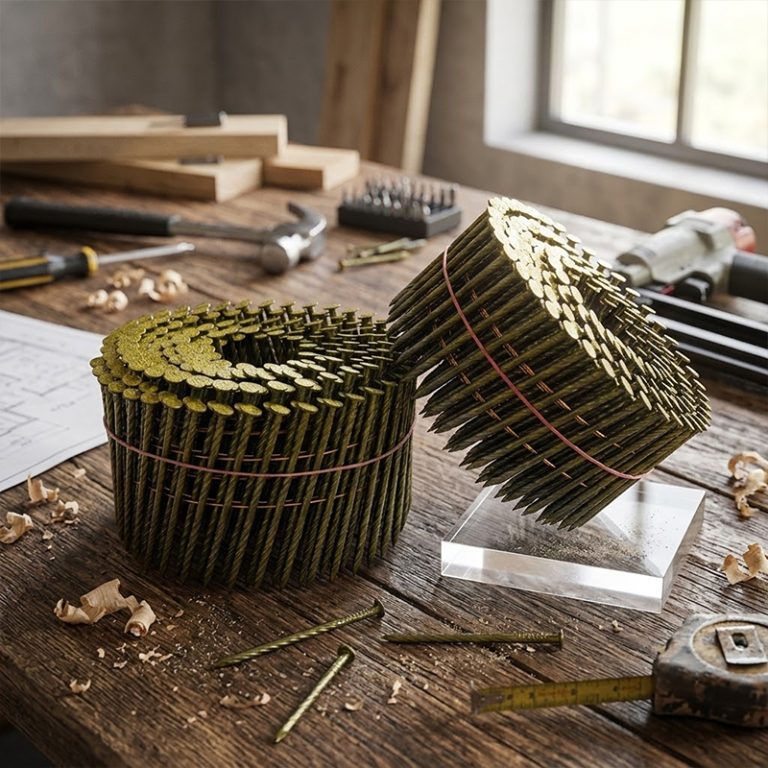
Choosing the right coil nails is an important step in any construction or woodworking project. The correct nails can improve fastening strength, reduce installation time, and help you get better results. However, not every coil nail suits every application. Different projects require different nail sizes, shank designs, and surface finishes.
So, how can you find the right coil nails for your needs?
Before placing an order, take a closer look at your materials, working environment, and nail gun specifications. This guide will explain the key factors you should consider and help you make a practical choice.
1. Start with Your Project Requirements
First, think about what you want to build or fasten. The application often determines which type of coil nail works best.
For example, roofing installation requires suitable nails that can secure roofing materials against wind and weather. Meanwhile, pallet manufacturing focuses more on fastening efficiency and consistent nail feeding.
Here are some common applications:
- Roofing: Roofing projects often require coil nails with suitable heads, lengths, and corrosion protection.
- Wood Framing: Framing work needs reliable holding power to connect wooden components securely.
- Pallet Manufacturing: Pallet factories usually need consistent nails that support fast, repetitive production.
- Fencing: Outdoor fencing requires suitable nail sizes and finishes to handle changing weather conditions.
- Wood Packaging: Wooden crates and packaging projects need nails that match the thickness and structure of the materials.
Once you understand your application, you can narrow down your options and avoid buying nails with unnecessary specifications.
2. Choose the Right Shank Type
The nail shank plays an important role in fastening performance. Different shank designs create different levels of friction and holding power.
Here are three common types of coil nails:
Smooth Shank Coil Nails
Smooth shank nails have a plain, even surface. They offer easy penetration and work well for general fastening applications where moderate holding power meets the project requirements.
Ring Shank Coil Nails
Ring shank nails feature small grooves around the nail body. These rings increase friction between the nail and the surrounding wood, helping the nail resist withdrawal.
They often suit applications such as wood framing, fencing, and other projects that require stronger holding power.
Screw Shank Coil Nails
Screw shank nails have a spiral-shaped body. Their design helps them grip wood firmly as they enter the material.
For projects that need extra resistance to nail pull-out, screw shank nails may offer a suitable solution.
When choosing a shank type, consider the material, fastening strength, and installation requirements. A more complicated shank design does not always mean better performance for every project.
3. Select the Correct Nail Length and Diameter
Nail dimensions directly affect fastening quality. A nail that is too short may not provide enough penetration, while an oversized nail can damage thinner materials or create unnecessary installation problems.
You should pay attention to two main measurements:
Nail Length
Choose a nail long enough to pass through the material and reach the supporting structure. For example, when fastening a board to a wooden frame, consider both the board thickness and the required penetration depth.
Nail Diameter
The nail diameter affects its strength and penetration behavior. Thicker nails can provide greater resistance to bending, but they may split thin or delicate wood.
Before purchasing, check the following specifications:
- Nail length
- Nail diameter
- Head diameter
- Shank type
- Applicable material thickness
If you are unsure about the correct size, share your material dimensions and application with your supplier. A professional supplier can help you identify suitable specifications.
4. Pick a Suitable Surface Finish
The surface finish affects how coil nails perform in different working environments. If your project involves moisture, rain, or outdoor exposure, corrosion protection becomes especially important.
Different coil nails offer different surface treatments.
Vinyl Coated Coil Nails
Vinyl coated coil nails feature a coating that can help reduce friction during nail driving. They are common in construction and woodworking applications where smooth feeding and convenient installation matter.
Electro-Galvanized Coil Nails
Electro-galvanized nails have a zinc coating that helps protect the steel surface from corrosion. They can suit indoor applications and some relatively mild environments, depending on the coating thickness and project requirements.
Hot-Dip Galvanized Coil Nails
Hot-dip galvanized nails have a thicker zinc coating than standard electro-galvanized nails. They generally provide better corrosion protection and often suit outdoor construction projects.
Keep in mind that no single finish fits every environment. For coastal areas, highly humid locations, or projects with frequent water exposure, check the required corrosion protection carefully.
5. Make Sure the Coil Nails Match Your Nail Gun
Even high-quality coil nails cannot deliver good results if they do not fit your nail gun.
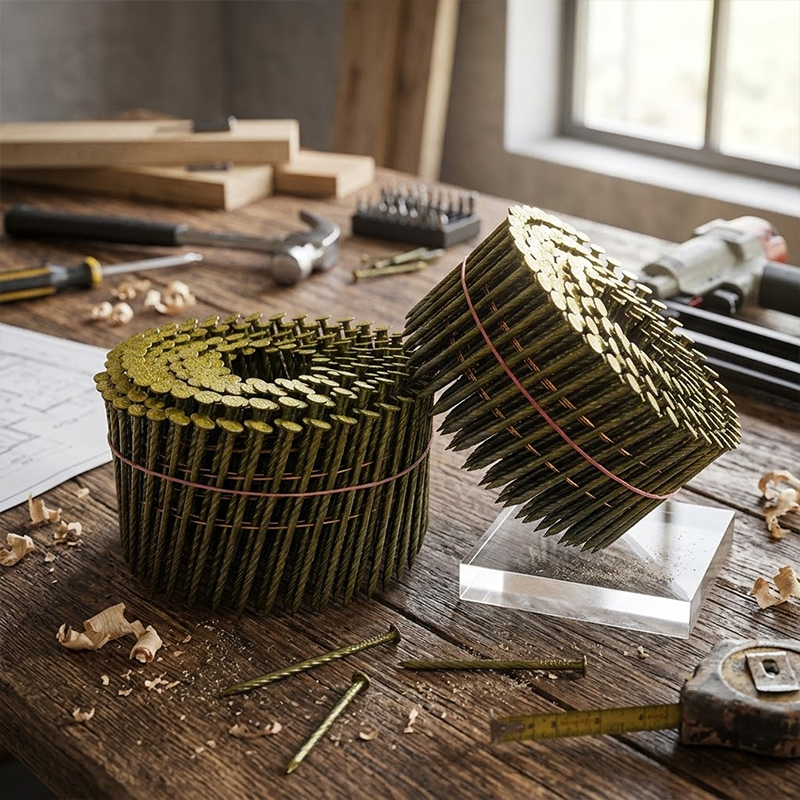
Coil nail guns use circular magazines to hold connected nails. However, different models support different nail specifications and collation systems.
Before ordering, check these important details:
- Nail Gun Model: Confirm the exact model and its supported nail specifications.
- Collation Angle: Different nail guns may require different angles, so check the manufacturer’s instructions.
- Nail Length and Diameter: Make sure the nail dimensions fall within the tool’s supported range.
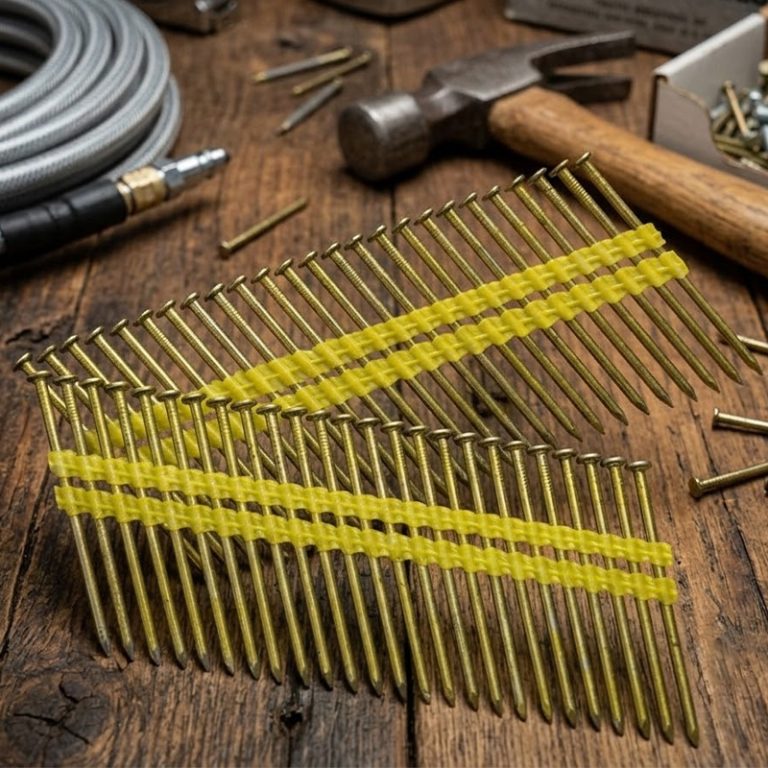
- Collation Type: Some nail guns use wire-welded coils, while others require plastic-sheet collation.
- Magazine Compatibility: Check whether the nail arrangement and coil size fit your equipment.
Do not assume that all coil nails work with all coil nail guns. Always compare the product specifications with your tool manual before purchasing.
6. Consider Nail Quality and Manufacturing Consistency
Product quality matters just as much as nail specifications. Poor-quality coil nails may bend during installation, feed unevenly, or cause problems with pneumatic nail guns.
These issues can interrupt production and increase maintenance costs.
When evaluating a coil nail supplier, pay attention to several details:
Steel Material
Suitable steel materials help nails maintain their strength and resist bending during installation. Ask your supplier about the material specifications if your project has specific strength requirements.
Dimensional Accuracy
Consistent nail length, diameter, and head dimensions help improve compatibility with nail guns. Small variations can create feeding or fastening problems.
Shank and Surface Quality
Check whether the nail shanks have consistent shapes and whether the surface finish looks uniform. A consistent coating helps maintain product quality.
Collation Quality
Good collation keeps the nails connected and helps the nail gun feed them smoothly. Weak or uneven connections may cause unnecessary interruptions.
Packaging
Reliable packaging protects nails during storage and transportation. It also helps prevent moisture damage and product contamination.
If you plan to purchase a large quantity, consider testing samples before confirming the full order.
7. Balance Product Price and Overall Value
Price is always an important factor, especially for wholesalers, distributors, and construction companies.
However, the lowest price does not always mean the best deal. Poor nail quality can lead to bent nails, feeding problems, wasted materials, and additional labor costs.
Instead of comparing prices alone, consider the overall value of the product.
For example, a slightly higher-priced coil nail may offer more consistent dimensions and better collation quality. If it helps reduce equipment interruptions, it may save money over time.
When comparing suppliers, consider:
- Product specifications and material quality
- Surface finish and corrosion protection
- Manufacturing consistency
- Packaging standards
- Production capacity
- Delivery time and order quantity
A reliable supplier should provide clear product information and help you confirm whether the nails match your requirements.
8. A Simple Checklist Before You Buy
Before placing an order, review these questions:
- What materials do you want to fasten?
- Which shank type offers the right holding power?
- What nail length and diameter do you need?
- Does the working environment require corrosion protection?
- Are the coil nails compatible with your nail gun?
- Can the supplier provide samples and detailed specifications?
- Does the product meet your quality and budget requirements?
By checking these points in advance, you can reduce purchasing risks and choose a more suitable product.
Conclusion
Choosing the right coil nails requires more than checking the price or selecting a familiar size. You should consider your application, nail dimensions, shank design, surface finish, and nail gun compatibility.
Whether you need smooth shank coil nails for general fastening, ring shank nails for stronger holding power, or galvanized coil nails for outdoor applications, the right specifications can make your project more efficient and reliable.
Looking for quality coil nails for your business or construction project? Contact our team today. Tell us your required specifications and application, and we will help you find a suitable solution.