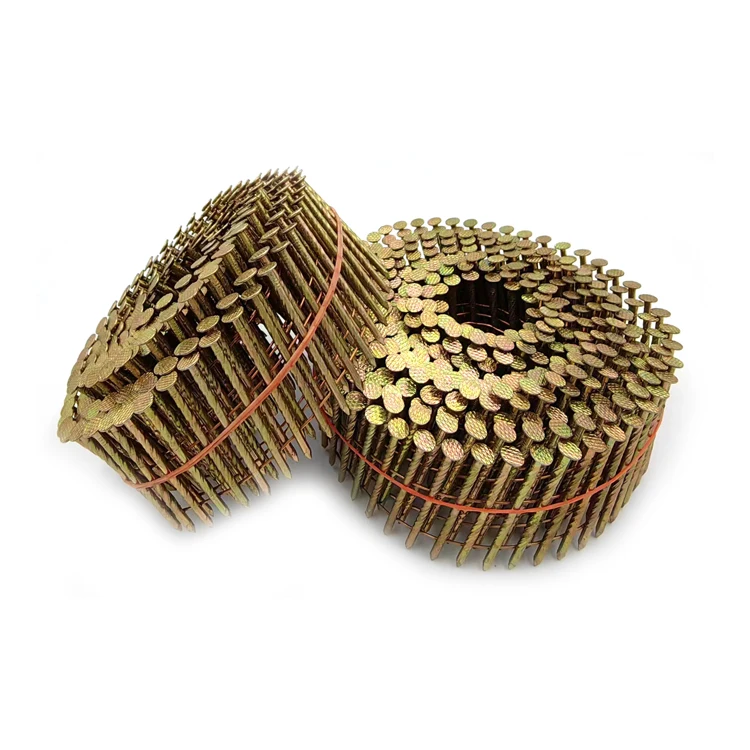
If you work in construction, woodworking, pallet manufacturing, or other industries that use a large number of nails, you may have heard of coil nails. They are designed to work with pneumatic nail guns and can help make fastening work faster and more efficient.
But what exactly are coil nails, and what should buyers know before purchasing them?
This guide explains the basics of coil nails in simple terms.
What Are Coil Nails?
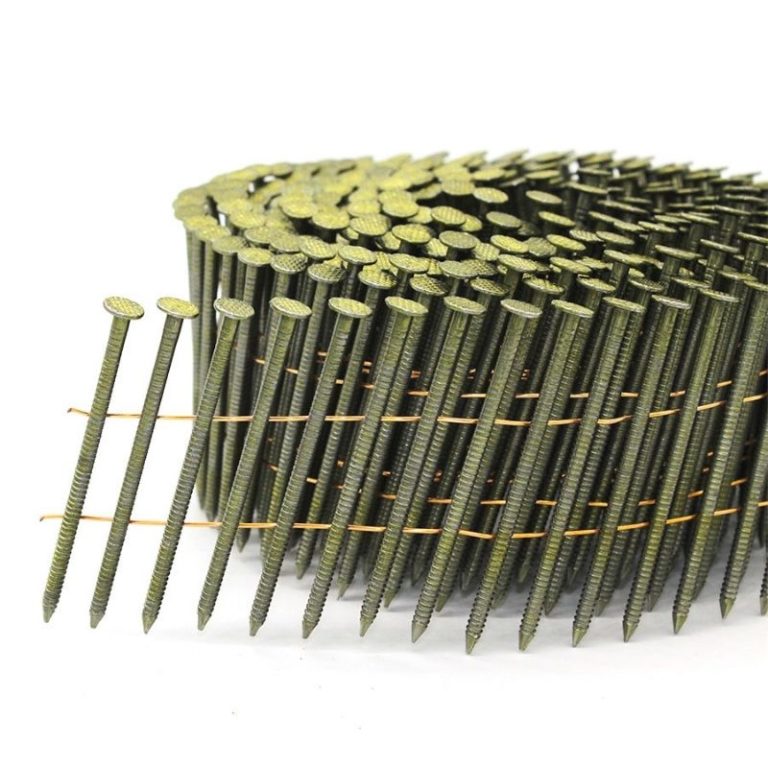
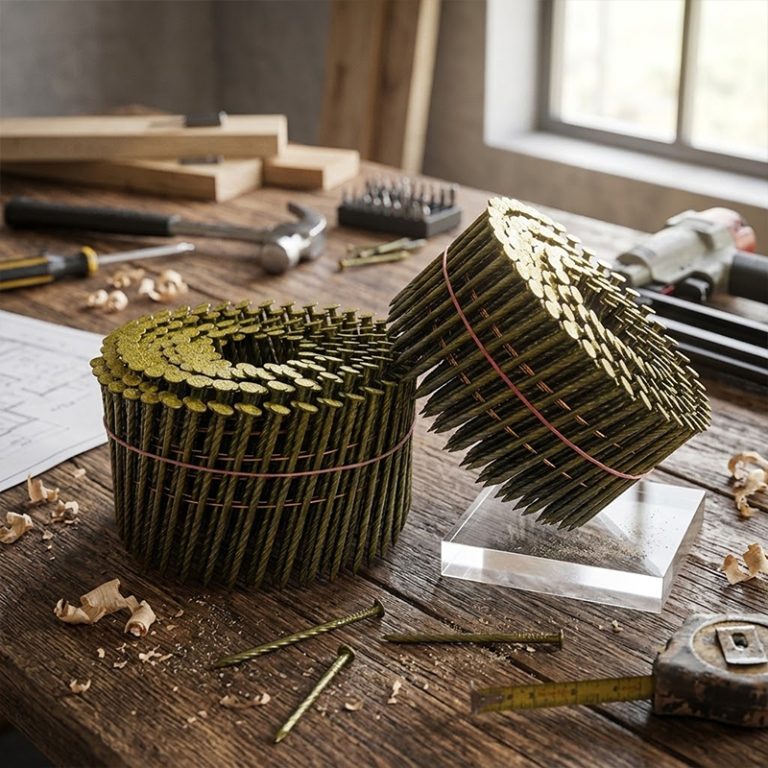
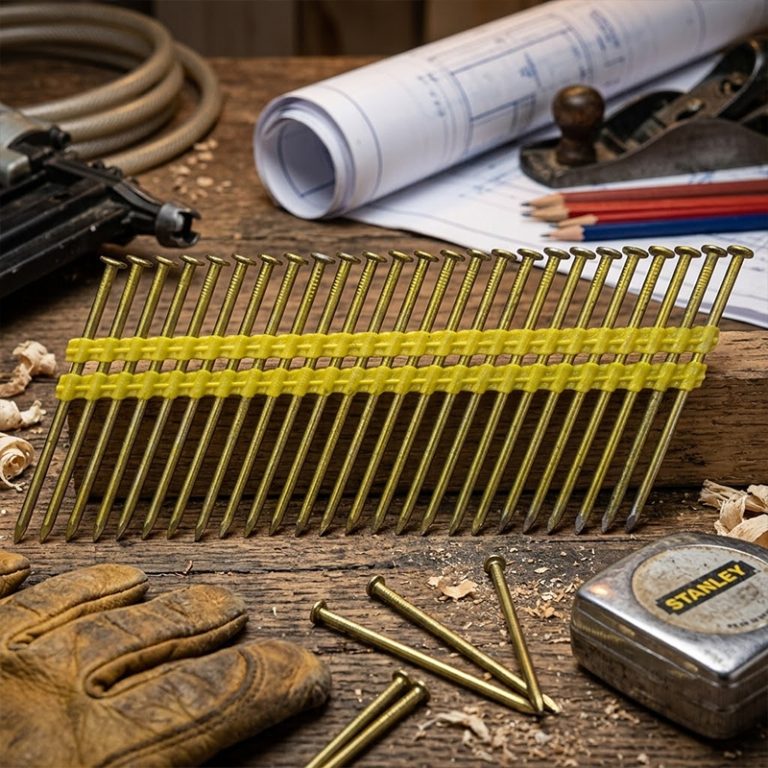
Coil nails are nails that are connected together in a continuous coil. The nails are usually held together by wire or plastic collation, depending on the product design.
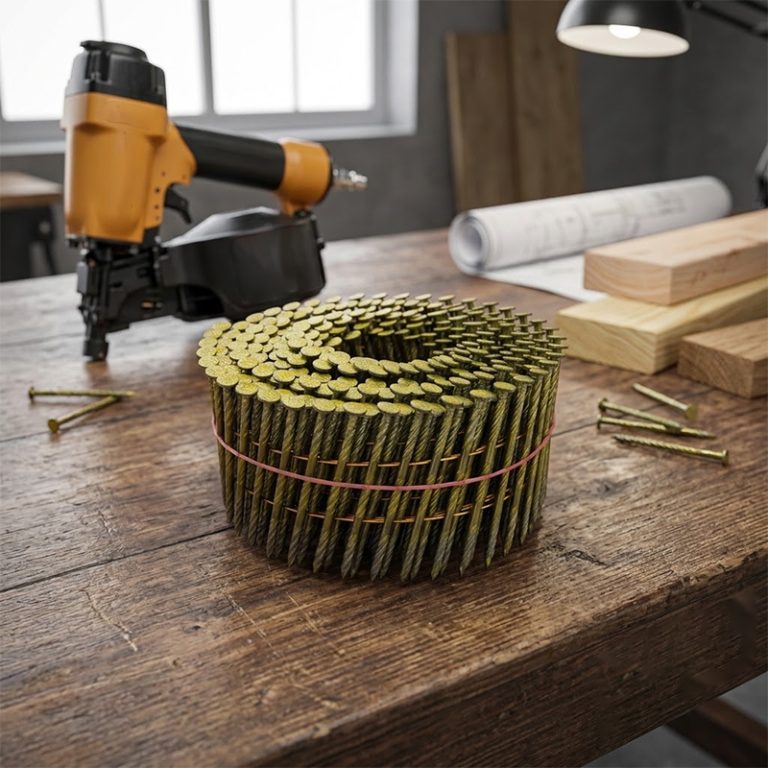
Unlike loose nails, coil nails can be loaded into a compatible coil nail gun. The tool feeds the nails automatically and drives them into the material one after another.
This makes coil nails especially useful for jobs that require a large number of fasteners.
How Do Coil Nails Work?
Coil nails are normally used with a pneumatic coil nail gun.
The process is simple:
- Load the coil nails into the nail gun.
- Connect the nail gun to the air supply.
- Position the tool on the material.
- Pull the trigger to drive the nail.
- The nail gun automatically feeds the next nail.
Because the nails are connected in a coil, users do not need to pick up and load individual nails after every shot.
Common Types of Coil Nails
Coil nails can be made with different shank designs and surface treatments.
Smooth Shank Coil Nails
Smooth shank nails have a plain nail body and are suitable for many general fastening applications. They are a common option when standard holding performance is sufficient.
Spiral Shank Coil Nails
Spiral shank nails have a spiral pattern along the shank. This design can increase friction between the nail and the wood and provide stronger holding power.
Ring Shank Coil Nails
Ring shank nails have small rings around the nail body. The rings can improve resistance to pull-out, making them useful when a stronger connection is required.
What Materials Can Coil Nails Be Used For?
Coil nails are mainly used for fastening wood and wood-based materials.
Common applications include:
- Wooden pallets
- Wood packaging
- Construction
- Fencing
- Roofing
- Siding
- General woodworking
The correct nail specification depends on the material, construction method, and requirements of the project.
Why Do Buyers Choose Coil Nails?
One of the main reasons buyers choose coil nails is productivity.
For high-volume fastening work, using a coil nail gun can reduce the time spent handling individual nails. Workers can continuously drive nails without frequently stopping to reload.
Other benefits include:
- High nailing efficiency
- Convenient automatic feeding
- Consistent fastening
- Different sizes and specifications
- Suitable for high-volume applications
These features make coil nails a practical choice for professional users.
What Coil Nail Specifications Should Buyers Check?
When buying coil nails, it is important to check the specifications carefully.
Nail Length and Diameter
The nail should match the thickness and type of material being fastened. Nail length and diameter can affect both fastening performance and compatibility with the nail gun.
Shank Type
Choose a smooth, spiral, or ring shank according to the required holding power and application.
Surface Treatment
Different environments may require different surface treatments. For example, zinc plated coil nails can provide better corrosion resistance than untreated nails.
Coil Angle and Collation
The coil angle and collation type must match the nail gun. Using incompatible nails may cause feeding problems or affect the performance of the tool.
How to Choose a Coil Nail Supplier?
For buyers purchasing coil nails in bulk, product quality and supply stability are important.
A reliable supplier should be able to provide consistent nail dimensions, stable production quality, suitable packaging, and specifications that match the buyer’s requirements.
It is also a good idea to confirm the nail gun model and application before placing a large order. This can help avoid compatibility problems.
Conclusion
Coil nails are a convenient fastening solution designed for fast and continuous nailing. Their coil format allows them to work efficiently with compatible pneumatic nail guns, making them popular in construction, woodworking, pallet manufacturing, and other industries.
For buyers, the most important factors to consider are nail size, shank type, surface treatment, collation, coil angle, and nail gun compatibility.
By understanding these basic specifications, buyers can make a more suitable choice and find coil nails that meet the needs of their projects.