Coil nails play an important role in construction, woodworking, roofing, and pallet manufacturing. They help workers complete fastening tasks quickly and improve productivity, especially when a project requires thousands of nails.
However, not all coil nails look or perform the same way. Different projects require different nail lengths, shank designs, surface finishes, and collation types. Understanding these differences can help you choose the right coil nails for your application.
In this guide, we will explore the main types of coil nails, explain their key features, and help you find the best option for your needs.
1. What Are Coil Nails?
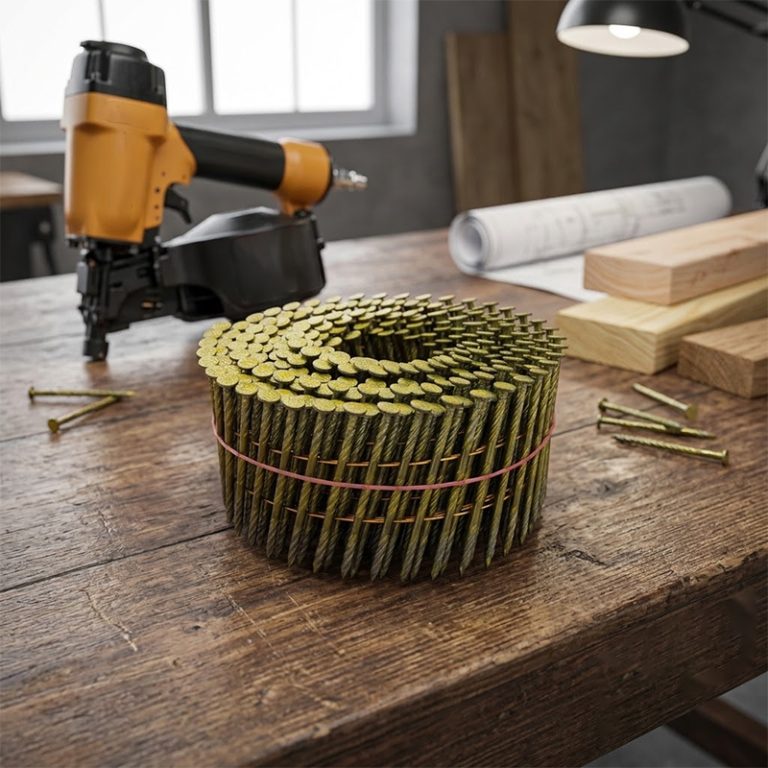
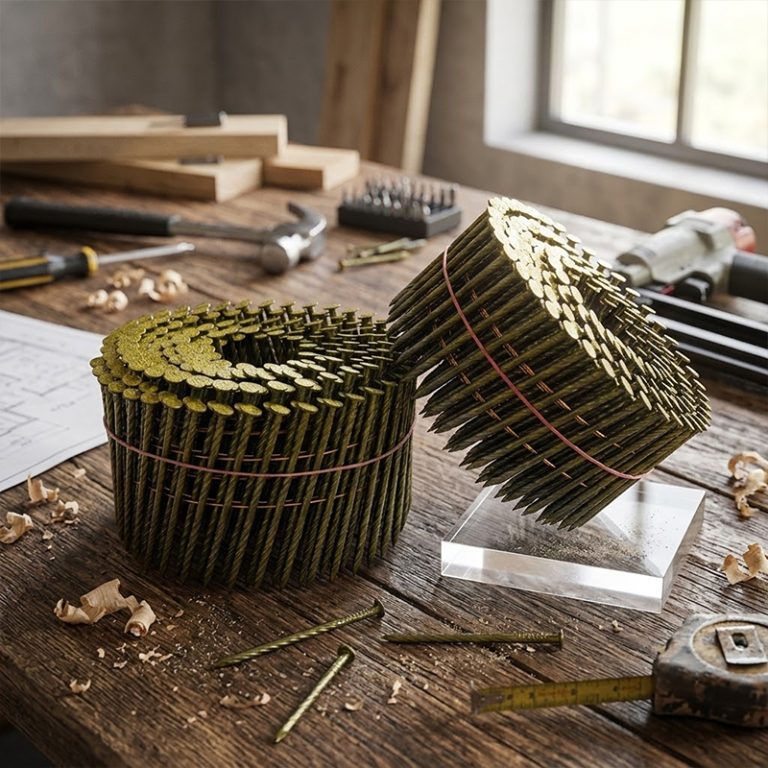
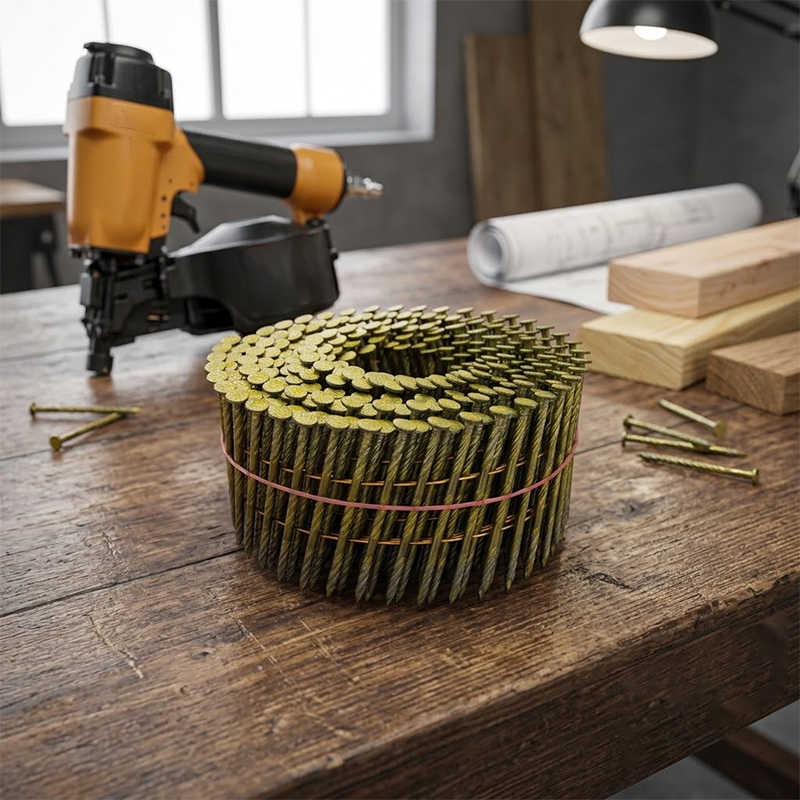
Coil nails are nails that manufacturers arrange in a circular coil and connect with wire or plastic. This design allows workers to load many nails into a coil nail gun and drive them continuously without frequent reloading.
Compared with loose nails, coil nails offer several advantages. They help improve working efficiency, reduce interruptions, and support high-volume fastening operations.
You can find coil nails in many sizes, materials, and surface finishes. Each type serves a different purpose, so choosing the right one depends on the material, working environment, and fastening requirements.
2. Types of Coil Nails by Shank Design
The shank is the long, narrow part of a nail between the head and the point. Its design affects how the nail interacts with the material and how well it resists withdrawal.
2.1 Smooth Shank Coil Nails
Smooth shank coil nails have a straight, plain surface. Their simple design makes them suitable for many general fastening applications.
Workers often use smooth shank nails for wooden pallets, crates, packaging, and other projects that require efficient assembly.
These nails usually offer easy penetration and straightforward installation. However, they generally provide less withdrawal resistance than comparable ring shank nails in similar materials.
Best for: General woodworking, pallet assembly, crates, and packaging.
2.2 Ring Shank Coil Nails
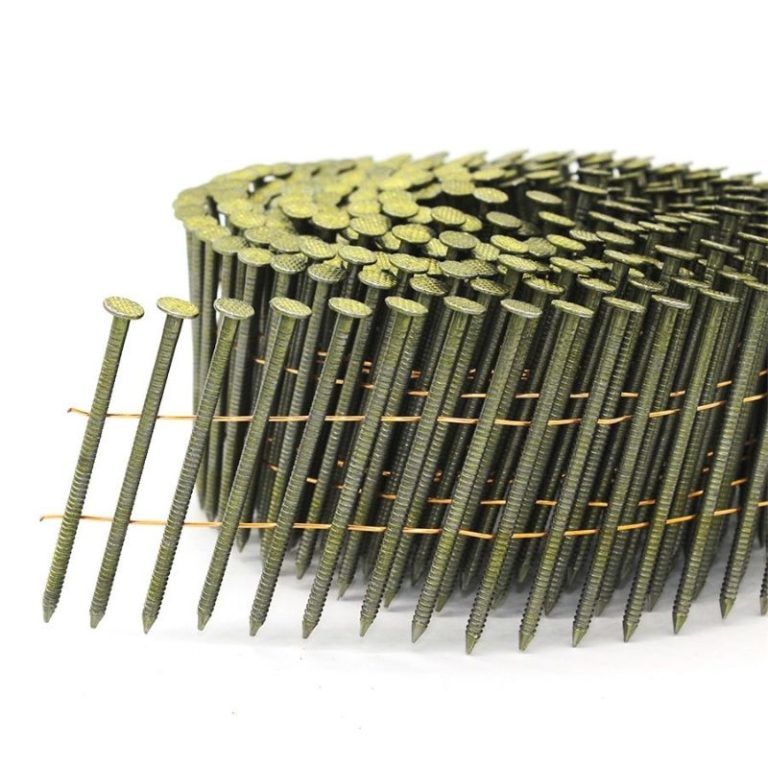
Ring shank coil nails feature circular ridges along the shank. These rings grip the surrounding material and help the nail resist pulling out.
For this reason, many builders choose ring shank nails when they need stronger holding power. They work well in applications such as roof sheathing, wall sheathing, fencing, and pallet manufacturing, depending on the nail specifications and project requirements.
However, ring shank nails may require more driving force than smooth shank nails of similar dimensions.
Best for: Fencing, sheathing, pallets, and applications that require improved withdrawal resistance.
2.3 Screw Shank Coil Nails
Screw shank coil nails feature a spiral-shaped shank. As the nail enters the material, the spiral helps it engage with the wood fibers.
This design can provide strong holding power in suitable materials. Manufacturers and construction professionals may choose screw shank nails for certain demanding wood fastening applications.
Keep in mind that performance depends on the wood species, nail dimensions, and installation conditions. Always check whether the nail design suits your specific project.
Best for: Selected wood fastening applications that require strong holding performance.
3. Types of Coil Nails by Surface Finish
Surface finish affects a nail’s appearance, corrosion resistance, and suitability for different environments. The right choice depends on where you plan to use the nails.
3.1 Bright Coil Nails
Bright coil nails have no additional protective coating on the steel surface. Their simple finish makes them a practical option for many indoor applications where moisture exposure remains limited.
Manufacturers often supply bright coil nails for general woodworking, packaging, and pallet production.
However, bright steel can rust when it comes into contact with moisture. Therefore, avoid using bright coil nails in exposed outdoor environments unless the application allows for their limited corrosion resistance.
Best for: Dry indoor applications, wooden packaging, and general fastening.
3.2 Electro-Galvanized Coil Nails
Electro-galvanized coil nails feature a thin zinc coating that helps protect the steel from corrosion. Manufacturers apply the coating through an electroplating process.
These nails can work well in indoor environments and some applications with limited moisture exposure. Their corrosion resistance depends on the coating thickness, quality, and surrounding conditions.
For outdoor projects with frequent rain or high humidity, consider whether a more corrosion-resistant finish would better meet your requirements.
Best for: Indoor construction, interior woodworking, and applications that need basic corrosion protection.
3.3 Hot-Dip Galvanized Coil Nails
Hot-dip galvanized coil nails feature a zinc coating that manufacturers create by immersing the nails in molten zinc. This process can provide a thicker protective coating than standard electroplating.
As a result, hot-dip galvanized nails often suit outdoor applications better than bright or lightly coated nails. Contractors may use them for fencing, roofing, and other projects exposed to weather, provided the coating meets the project’s requirements.
Nevertheless, not every galvanized nail offers the same level of protection. Check the coating specifications and local building requirements before making a selection.
Best for: Outdoor construction, fencing, and suitable roofing or sheathing applications.
3.4 Stainless Steel Coil Nails
Stainless steel coil nails offer excellent corrosion resistance in many environments. They can be a good choice for coastal construction, exterior woodworking, and projects where rust stains or corrosion could cause problems.
Different stainless steel grades provide different levels of corrosion resistance. Therefore, consider the exposure conditions before selecting a grade.
Although stainless steel nails usually cost more than standard carbon steel nails, they can offer better long-term performance in demanding environments.
Best for: Coastal areas, exterior woodwork, and projects that require enhanced corrosion resistance.
4. Types of Coil Nails by Collation Method
Collation refers to the way manufacturers connect nails into a coil. The collation method affects nail compatibility, loading, and feeding in the nail gun.
4.1 Wire Weld Coil Nails
Wire weld coil nails use thin wires to connect the nails into a coil. This design creates a continuous nail strip that a compatible coil nail gun can feed during operation.
Wire weld coil nails are common in construction and industrial fastening. They can support applications such as roofing, fencing, and pallet manufacturing, depending on the nail and tool specifications.
When choosing wire weld coil nails, check the nail angle, dimensions, and magazine compatibility.
Best for: Suitable construction, woodworking, and industrial fastening applications.
4.2 Plastic Collated Coil Nails
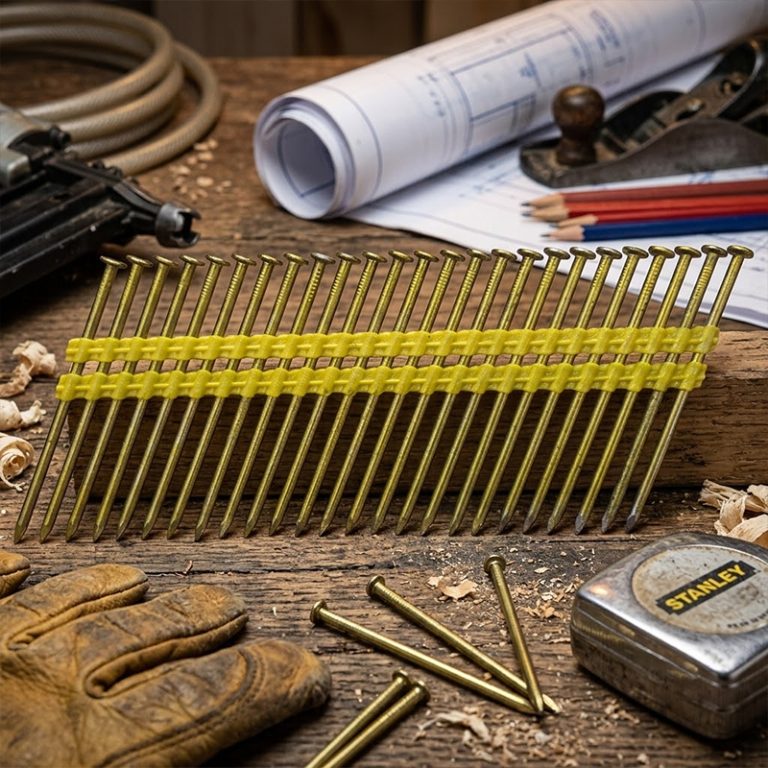
Plastic collated coil nails use plastic strips or carriers to hold the nails together. The plastic helps maintain the nail arrangement before and during feeding.
These nails work with compatible nail guns designed for plastic-collated coils. Different products may use different plastic materials and collation designs, so buyers should confirm compatibility before ordering.
For bulk purchasing, also consider the nail dimensions, collation angle, and intended application.
Best for: Projects that use nail guns designed specifically for plastic-collated coil nails.
5. Types of Coil Nails by Application
Different industries have different fastening requirements. Choosing nails based on the intended application can help you avoid compatibility problems and improve the final result.
5.1 Roofing Coil Nails
Roofing coil nails help contractors attach roofing materials, including asphalt shingles, to suitable roof decking.
These nails often feature a wide head that helps hold the roofing material in place. Contractors also consider nail length, shank design, corrosion resistance, and local roofing requirements.
For outdoor roofing projects, choose nails with a suitable corrosion-resistant finish and confirm that the product meets the roofing system’s specifications.
5.2 Siding Coil Nails
Siding coil nails help installers attach suitable siding materials to building structures. Depending on the siding system, the nails may require specific head dimensions, lengths, and corrosion-resistant finishes.
For example, some exterior siding applications need nails that can withstand long-term weather exposure. Others may require particular fastening specifications to accommodate the siding material.
Always follow the siding manufacturer’s installation instructions when choosing nails.
5.3 Pallet Coil Nails
Pallet coil nails support the production of wooden pallets, crates, and shipping containers. Since manufacturers often assemble these products in large quantities, coil nails help improve production speed.
Smooth shank, ring shank, and other suitable designs can serve different pallet applications. The best choice depends on the wood, pallet design, load requirements, and production equipment.
For high-volume manufacturing, consistent nail dimensions and reliable feeding performance also matter.
5.4 Framing and Construction Coil Nails
Some coil nail guns support specific framing and construction applications, including sheathing and other wood assembly tasks.
For these jobs, workers need to consider nail length, diameter, shank design, and the requirements of the construction system. Structural applications may also require nails that meet specific standards or approvals.
Before purchasing, confirm that both the nail gun and the nail product suit the intended application.
6. How to Choose the Right Type of Coil Nails
With so many options available, how can you find the right coil nails for your project? Start with these five factors.
1. Identify the application. Determine whether you need nails for roofing, fencing, pallets, siding, or general woodworking. Different applications have different fastening requirements.
2. Select the right shank design. Smooth shank nails suit many general applications, while ring shank and screw shank designs can offer increased withdrawal resistance in suitable materials.
3. Choose an appropriate surface finish. Bright nails often suit dry indoor environments. Galvanized or stainless steel nails may offer better corrosion resistance for outdoor or demanding applications.
4. Check the nail dimensions. Confirm the nail length, diameter, head type, and point design. The nails must also match your coil nail gun.
5. Confirm the collation type. Check whether your nail gun supports wire weld or plastic-collated coil nails. Also verify the collation angle and other manufacturer specifications.
By considering these factors, you can narrow your options and select coil nails that meet your performance and budget requirements.
7. Why Quality Matters When Buying Coil Nails in Bulk
For wholesalers, distributors, construction companies, and pallet manufacturers, nail quality can affect both productivity and operating costs.
First, consistent nail dimensions help maintain reliable feeding in compatible nail guns. This can reduce interruptions caused by mismatched or irregular nails.
Second, a suitable surface finish helps the nails perform better in their intended environment. Choosing the wrong coating may lead to premature corrosion and unnecessary maintenance.
Finally, reliable packaging and consistent product specifications make storage, transportation, and inventory management easier.
When comparing suppliers, ask about available sizes, shank designs, surface finishes, collation types, packaging options, and quality control procedures. If your project requires specific standards or test reports, confirm those details before placing a bulk order.
Conclusion
Coil nails come in many types, and each design serves a different purpose. Smooth shank, ring shank, and screw shank nails offer different holding characteristics. Bright, galvanized, and stainless steel finishes provide different levels of corrosion resistance. Meanwhile, wire weld and plastic collation determine which nail guns can use the coils.
To make the right choice, consider your application, material, working environment, nail specifications, and equipment compatibility.
Looking for coil nails for your business? Explore our range of coil nails in different sizes, shank designs, and surface finishes. Contact our team to discuss your requirements and find a suitable solution for your fastening projects.