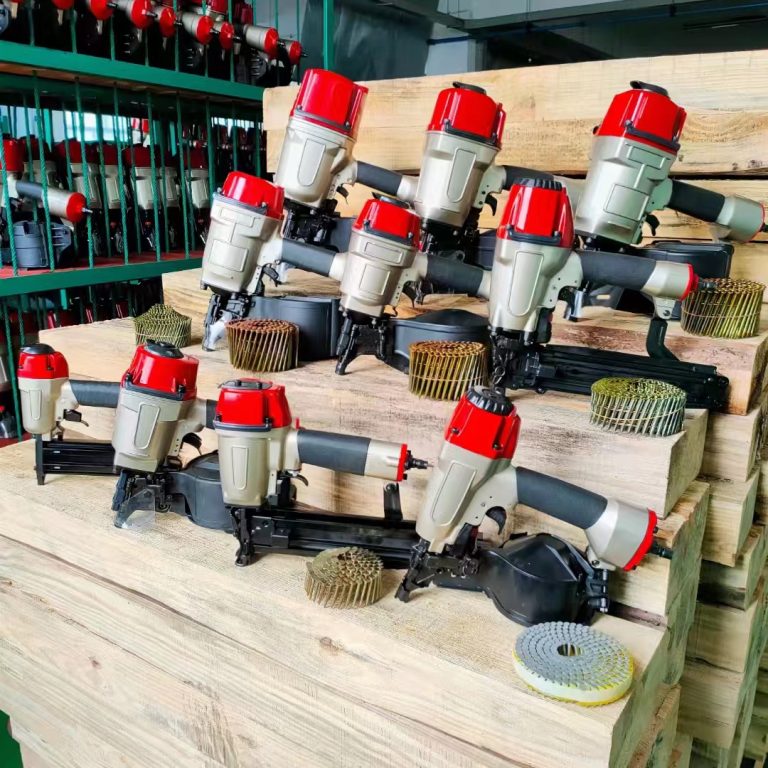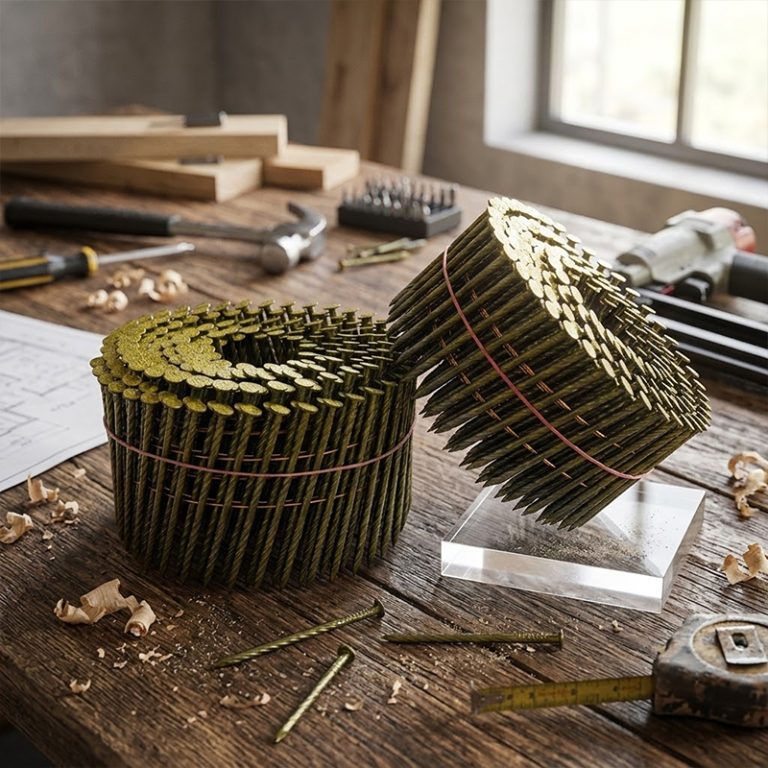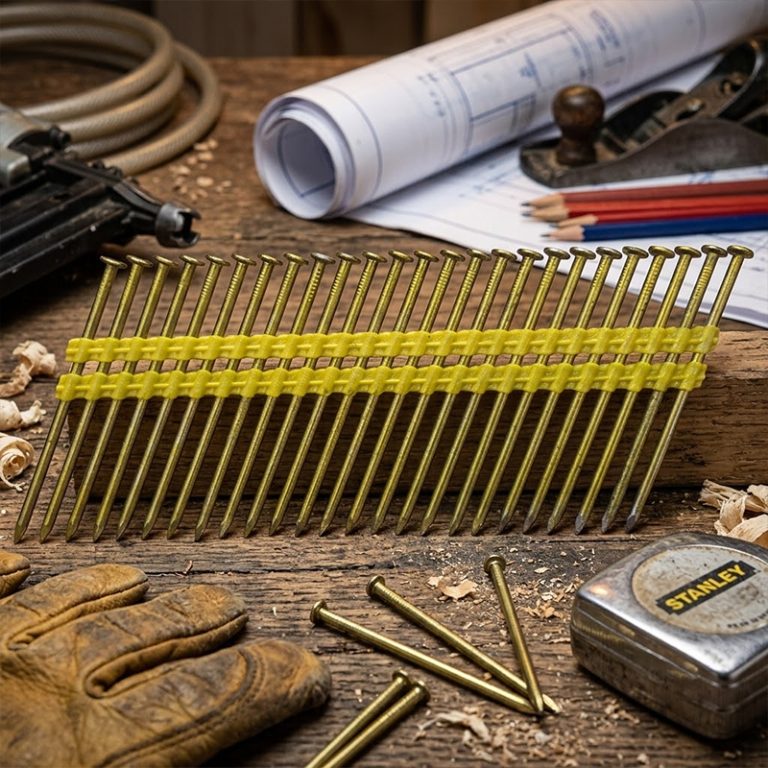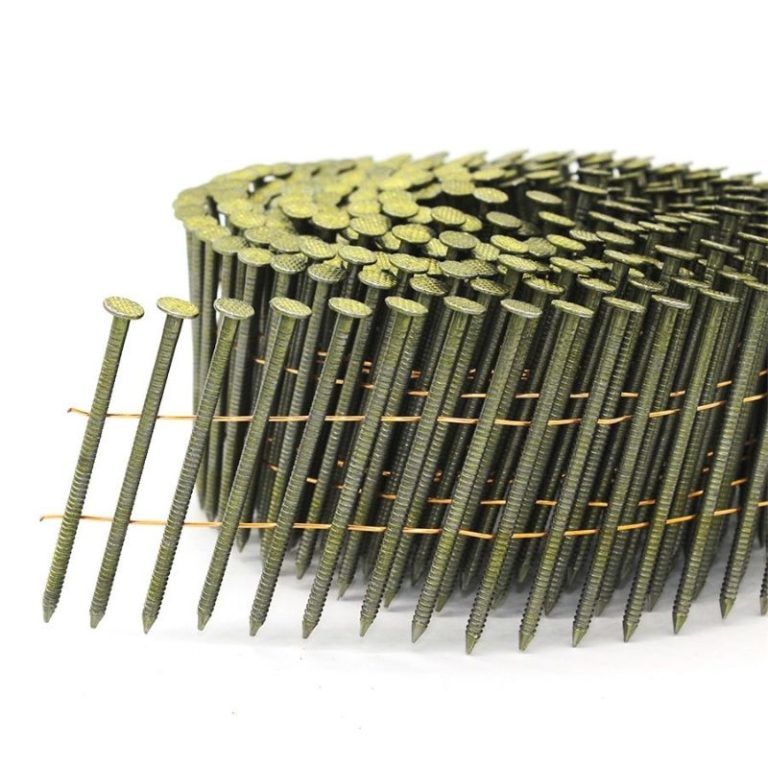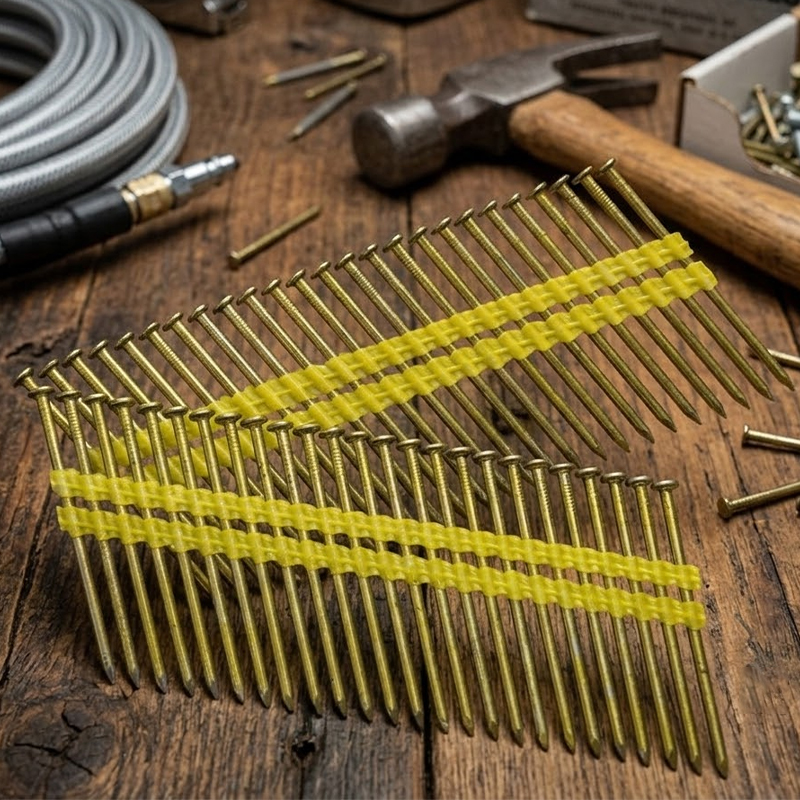
Plastic strip nails are widely used in construction, woodworking, and other fastening applications. They help professionals complete repetitive nailing tasks quickly and efficiently. From wood framing to sheathing and outdoor construction, these nails offer a practical solution for projects that require reliable fastening.
However, plastic strip nails come in different designs, sizes, and surface finishes. Each type serves a specific purpose, so choosing the right nails can make a big difference in work efficiency and fastening performance.
In this guide, we will explore the main types of plastic strip nails, explain their key features, and help you choose the right products for your business or project.
1. What Are Plastic Strip Nails?
Plastic strip nails are nails that manufacturers arrange in straight strips and connect with plastic strips or carriers. This design allows a compatible framing nailer to feed nails automatically during operation.
Unlike loose nails, plastic strip nails help workers maintain a steady working pace without loading individual nails one by one. As a result, they work well for construction projects that require frequent and repetitive fastening.
Plastic strip nails come in different lengths, diameters, shank designs, and surface finishes. Manufacturers also produce different collation angles to match various nail guns.
Before choosing a product, always check the nail specifications and confirm that your nail gun supports the strip angle and nail type.
2. Types of Plastic Strip Nails by Shank Design
The shank is the long body of a nail between its head and point. Its design affects how the nail grips the material and resists withdrawal.
2.1 Smooth Shank Plastic Strip Nails
Smooth shank plastic strip nails have a plain, straight surface without ridges or spiral grooves. Their simple design allows them to penetrate suitable materials efficiently.
Contractors often use smooth shank nails for general wood framing and other applications where the project specifications allow this nail design.
These nails offer a straightforward fastening solution. However, they generally provide less withdrawal resistance than comparable ring shank nails in similar materials.
Common applications: General wood framing, construction, and suitable woodworking projects.
2.2 Ring Shank Plastic Strip Nails
Ring shank plastic strip nails feature circular ridges along the shank. These ridges grip the surrounding wood fibers and help the nail resist pulling out.
For this reason, ring shank nails can provide stronger holding power than smooth shank nails of similar dimensions in suitable materials.
Builders may choose ring shank nails for sheathing, fencing, and other applications that require improved withdrawal resistance. However, the correct nail design depends on the material, installation method, and project requirements.
Common applications: Wood sheathing, fencing, and construction projects that require enhanced holding power.
2.3 Screw Shank Plastic Strip Nails
Screw shank plastic strip nails feature spiral grooves along the shank. As the nail enters the material, these grooves help it engage with the wood fibers.
This design can provide strong holding performance in suitable applications. However, screw shank nails do not suit every nail gun or construction project.
Before purchasing, check the manufacturer’s specifications and make sure the nail design meets your fastening requirements.
Common applications: Selected wood fastening applications that require strong withdrawal resistance.
3. Types of Plastic Strip Nails by Surface Finish
The surface finish affects a nail’s corrosion resistance and suitability for different working environments. If you plan to use plastic strip nails outdoors, pay close attention to the coating and the expected exposure to moisture.
3.1 Bright Plastic Strip Nails
Bright plastic strip nails have no additional protective coating on the steel surface. Their simple finish makes them a practical choice for many indoor construction and woodworking applications.
Manufacturers often supply bright nails for projects where moisture exposure remains limited.
However, bright steel can rust when it comes into contact with moisture. Therefore, avoid using these nails in exposed outdoor environments unless the application allows for their limited corrosion resistance.
Common applications: Dry indoor construction, general woodworking, and suitable framing projects.
3.2 Electro-Galvanized Plastic Strip Nails
Electro-galvanized plastic strip nails feature a thin zinc coating that helps protect the steel from corrosion. Manufacturers apply this coating through an electroplating process.
These nails can work well in indoor environments and some applications with limited moisture exposure. Their corrosion resistance depends on the coating thickness, quality, and surrounding conditions.
For projects that face frequent rain or prolonged moisture, consider whether a more corrosion-resistant finish would better meet your needs.
Common applications: Interior construction and applications that require basic corrosion protection.
3.3 Hot-Dip Galvanized Plastic Strip Nails
Hot-dip galvanized plastic strip nails feature a zinc coating that manufacturers create by immersing the nails in molten zinc.
This process can provide a thicker protective coating than standard electroplating, making hot-dip galvanized nails a useful option for many outdoor applications.
Contractors may use them for exterior wood construction, fencing, and other projects exposed to weather, provided the product meets the relevant project specifications.
Keep in mind that coating quality and thickness vary. Always confirm the corrosion-resistance requirements before selecting nails for demanding outdoor conditions.
Common applications: Outdoor wood construction, fencing, and suitable exterior fastening projects.
3.4 Stainless Steel Plastic Strip Nails
Stainless steel plastic strip nails offer excellent corrosion resistance in many environments. They can help reduce rust problems in coastal areas, exterior woodworking, and other applications where moisture presents a challenge.
Different stainless steel grades provide different levels of corrosion resistance. Therefore, choose a suitable grade based on the environment and the materials involved.
Although stainless steel nails generally cost more than carbon steel nails, they can offer better long-term performance in demanding conditions.
Common applications: Coastal construction, exterior woodworking, and projects that require enhanced corrosion resistance.
4. Types of Plastic Strip Nails by Nail Angle
Nail angle is an important factor when choosing plastic strip nails. Different nail guns use different magazine designs, so you must match the nail strip to the tool.
Common plastic strip nail angles include 21 degrees, 28 degrees, and 34 degrees, although availability varies by manufacturer and product range.
4.1 21-Degree Plastic Strip Nails
Many 21-degree framing nailers use plastic-collated nail strips. These nails suit compatible tools designed for this angle.
The exact nail dimensions, head style, and collation design can vary. Therefore, check the nail gun manual before ordering replacement nails.
4.2 28-Degree Plastic Strip Nails
Some 28-degree nailers use plastic-collated strips, while other tools use different collation systems. Compatibility depends on the specific nail gun design.
Before purchasing, confirm both the collation angle and the manufacturer’s approved nail specifications.
4.3 34-Degree Plastic Strip Nails
Many 34-degree framing nailers use paper-collated nails, but plastic-collated products may also exist for certain tool systems.
Do not assume that every 34-degree nail gun accepts plastic strip nails. Always verify the tool’s compatibility requirements.
Important: Nail angle alone does not guarantee compatibility. Nail length, diameter, head type, collation design, and the nail gun model also matter.
5. Types of Plastic Strip Nails by Application
Different projects require different fastening solutions. Understanding the main applications can help you choose the right plastic strip nails more easily.
5.1 Framing Plastic Strip Nails
Framing nails help workers connect wooden structural components during construction. Contractors use compatible framing nailers to assemble wall frames, floor structures, roof structures, and other wood components.
The right nail depends on the wood thickness, fastening requirements, and applicable building codes. For structural work, always follow the project specifications and use approved fasteners where required.
5.2 Sheathing Plastic Strip Nails
Sheathing nails help attach suitable panels to wood framing. Contractors may use them for wall sheathing, roof sheathing, and other construction applications.
Ring shank designs can offer improved withdrawal resistance in suitable materials. However, nail length, spacing, panel type, and local building requirements also influence fastening performance.
Choose a nail that meets the specifications of the sheathing system rather than relying on shank design alone.
5.3 Fencing Plastic Strip Nails
Wood fencing often requires many fasteners to connect boards and rails. Compatible plastic strip nails can help workers complete these tasks efficiently.
For outdoor fencing, consider corrosion resistance as well as nail length and holding power. A suitable galvanized or stainless steel product may offer better protection against moisture, depending on the exposure conditions.
5.4 General Wood Construction Nails
Plastic strip nails also support many general wood construction tasks. Their straight-strip design allows compatible nail guns to feed nails quickly, helping contractors maintain a consistent working pace.
Before selecting a product, consider the wood type, material thickness, environment, and tool specifications.
6. How to Choose the Right Plastic Strip Nails
With so many options available, how can you choose the right plastic strip nails for your project? Start with these five factors.
1. Check the nail gun compatibility.
Confirm the required nail angle, collation type, nail length, diameter, and head style. Never assume that nails from different manufacturers will fit the same tool simply because they look similar.
2. Choose the right shank design.
Smooth shank nails suit many general fastening applications. Ring shank and screw shank designs can provide increased withdrawal resistance in suitable materials.
3. Consider the working environment.
Bright nails often suit dry indoor applications, while galvanized or stainless steel nails may offer better corrosion resistance for outdoor projects. Choose the finish according to the actual exposure conditions.
4. Confirm the nail dimensions.
Nail length and diameter affect penetration and fastening performance. Select dimensions that meet the project specifications and the nail gun manufacturer’s recommendations.
5. Evaluate product quality and consistency.
For professional construction and bulk purchasing, consistent nail dimensions and reliable plastic collation help maintain smooth feeding. Ask suppliers about quality control, available specifications, packaging, and customization options.
By checking these factors before ordering, you can reduce compatibility problems and select products that match your requirements.
7. Why Quality Matters When Buying Plastic Strip Nails in Bulk
For wholesalers, distributors, and construction companies, product consistency matters just as much as price.
First, consistent nail dimensions help compatible nail guns feed nails reliably. Poorly matched or irregular nails may cause jams and interrupt work.
Second, reliable plastic collation helps keep the nail strip together during handling and loading. This feature matters when workers use nail guns throughout the day.
Third, the correct surface finish helps the nails perform in their intended environment. Choosing an unsuitable finish may lead to premature corrosion and additional maintenance costs.
Finally, clear specifications make purchasing easier. When comparing suppliers, check nail dimensions, shank designs, surface finishes, collation angles, packaging, and quality control procedures.
If your project requires specific standards, certifications, or test reports, confirm these details with the supplier before placing an order.
Conclusion
Plastic strip nails come in different types to meet the needs of construction, woodworking, and other fastening applications. Smooth shank, ring shank, and screw shank nails offer different holding characteristics. Bright, galvanized, and stainless steel finishes provide different levels of corrosion resistance. Meanwhile, nail angle and collation design determine compatibility with specific nail guns.
To choose the right plastic strip nails, consider your application, working environment, nail dimensions, and equipment requirements.
Looking for reliable plastic strip nails for your business? Explore our range of plastic strip nails in different sizes, shank designs, and surface finishes. Contact our team to discuss your requirements and find the right fastening solution for your projects.