When choosing nails for construction, woodworking, or other fastening projects, you may come across two common options: plastic strip nails and coil nails. Both work with pneumatic nail guns and help improve work efficiency. However, they have different designs, loading methods, and applications.
So, which one should you choose?
The answer depends on your project, working environment, and equipment. In this guide, we will compare plastic strip nails and coil nails, explain their main differences, and help you find the right option for your needs.
1. What Are Plastic Strip Nails?
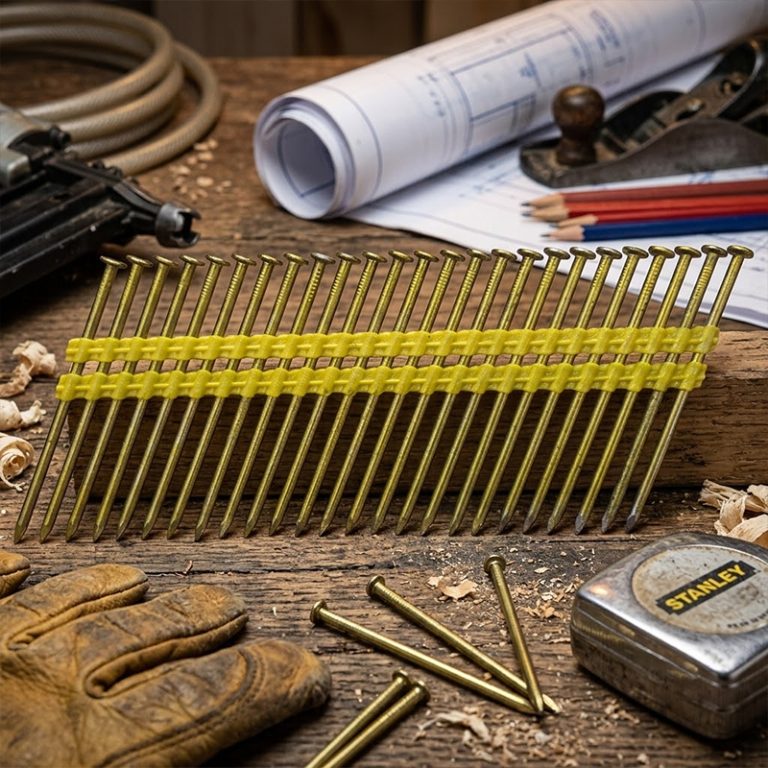
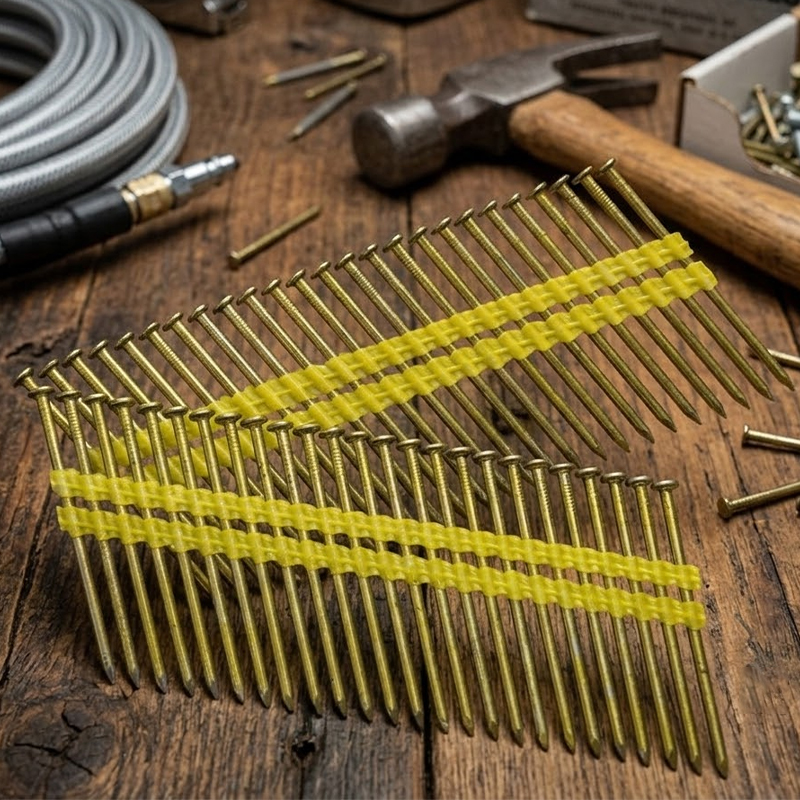
Plastic strip nails are connected by plastic strips that hold individual nails together. A nail gun feeds these nails one by one into the firing mechanism.
Unlike loose nails, the plastic connection keeps the nails organized and helps the tool work continuously.
Plastic strip nails commonly feature a straight or angled arrangement, depending on the nail gun design. Manufacturers also offer different nail lengths, diameters, head styles, and shank types.
Common applications include:
- Wood framing
- Wall and roof sheathing
- Wooden pallets and crates
- Fencing
- General construction
- Other woodworking projects
Plastic strip nails work particularly well in framing applications where workers need consistent fastening and easy handling.
2. What Are Coil Nails?
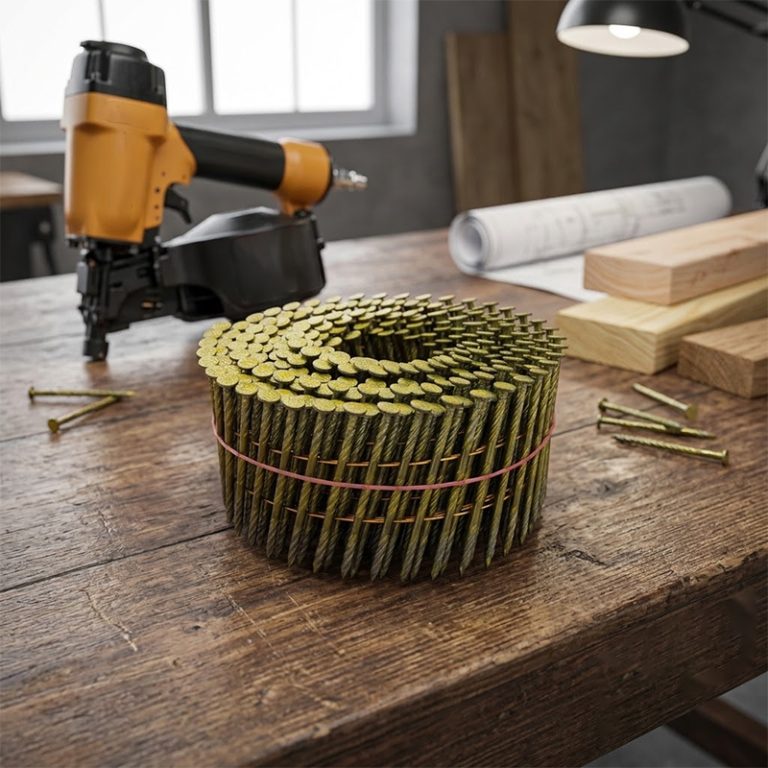
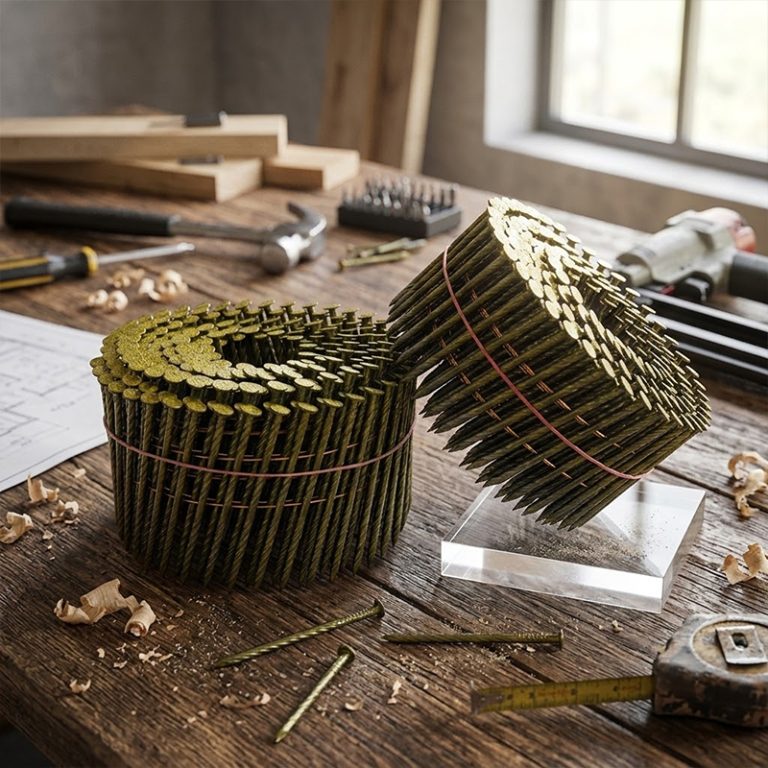
Coil nails come in connected rolls or coils. A thin wire or plastic connection holds the nails together, allowing workers to load many nails into a coil nail gun at once.
This design gives coil nails one major advantage: a coil magazine can hold significantly more nails than many strip-style magazines. As a result, workers spend less time reloading and can maintain a steady working pace.
Coil nails come in several designs, including:
- Smooth shank coil nails
- Ring shank coil nails
- Screw shank coil nails
- Vinyl coated coil nails
- Galvanized coil nails
You can find coil nails in applications such as:
- Roofing installation
- Fencing
- Pallet and crate manufacturing
- Siding installation
- Wood packaging
- General construction
Because coil nail guns can hold a large number of nails, they are especially useful for projects that involve frequent and repetitive fastening.
3. Plastic Strip Nails vs Coil Nails: Main Differences
Although both products serve similar fastening purposes, their designs create several practical differences.
Let’s take a closer look.
| Comparison | Plastic Strip Nails | Coil Nails |
|---|---|---|
| Connection Method | Plastic strips | Wire or plastic connections |
| Nail Arrangement | Straight or angled strips | Circular coils |
| Magazine Design | Strip magazine | Circular coil magazine |
| Reloading Frequency | Usually more frequent | Usually less frequent |
| Typical Applications | Framing, sheathing, fencing | Roofing, pallets, fencing, construction |
| Main Advantage | Convenient handling and reliable feeding | High nail capacity and fewer reloads |
The most obvious difference lies in how each product connects and stores the nails.
Plastic strip nails come in individual strips, while coil nails form compact rolls. Therefore, the two products require different nail gun designs.
However, neither option works better in every situation. Your project requirements should guide your decision.
4. Which One Offers Better Working Efficiency?
Working efficiency often plays an important role in construction and manufacturing. When workers need to drive hundreds or thousands of nails every day, loading time and equipment performance matter.
Coil Nails: Fewer Reloads
Coil nail guns usually hold more nails than strip nail guns. This means workers can complete more fastening tasks before stopping to reload.
For example, pallet manufacturers and roofing contractors often work with large quantities of nails. In these situations, coil nails can help reduce interruptions and maintain a continuous workflow.
Plastic Strip Nails: Simple and Convenient Feeding
Plastic strip nails offer organized nail feeding and work well with compatible framing nail guns. Workers can load a strip quickly and continue their tasks without handling individual nails.
They also suit many framing and woodworking applications where workers need reliable fastening and convenient tool operation.
In short, coil nails often offer an advantage in high-volume work, while plastic strip nails provide a practical solution for many framing and general construction tasks.
5. Which Nail Type Is Better for Different Applications?
The best choice depends on the job. Here are some examples to help you decide.
Wood Framing
Both plastic strip nails and coil nails can work in wood construction, depending on the nail gun and project requirements.
Plastic strip nails are a common choice for framing because many framing nailers use straight or angled nail strips. They work well for wall framing, sheathing, and similar tasks.
Coil nails can also handle certain framing and wood construction jobs, especially when the tool supports the required nail specifications.
Roofing Installation
Coil nails often make a better choice for roofing work. Roofing contractors frequently use pneumatic coil roofing nailers, which can hold a large number of nails and support continuous installation.
Roofing coil nails also come in different lengths, shank designs, and surface finishes. For outdoor roofing projects, choose a suitable corrosion-resistant finish according to the roofing material and local requirements.
Pallet and Crate Manufacturing
Coil nails are particularly useful in pallet and crate manufacturing. Production lines often require fast, repetitive fastening, so fewer reloads can improve workflow.
Some manufacturers also use plastic strip nails for specific wooden packaging applications. However, always check the nail gun design and production requirements before choosing.
Fencing and Decking
Both nail types may suit fencing and decking projects. The right option depends on the equipment, wood thickness, required holding power, and exposure to moisture.
For outdoor projects, pay special attention to corrosion resistance. Galvanized nails may offer better protection against rust than uncoated steel nails.
6. Nail Gun Compatibility: An Important Factor
Before buying either product, check your nail gun specifications carefully.
Plastic strip nails and coil nails use different magazine designs. A strip nail gun cannot normally use coil nails, and a coil nail gun cannot use plastic strip nails.
Even within the same product category, not all nails fit every tool.
Here are the key specifications to check:
- Nail Length: Confirm the supported length range of your nail gun.
- Nail Diameter: Make sure the nail diameter matches the tool’s requirements.
- Collation Angle: Check the angle required by your specific nail gun.
- Nail Head: Confirm that the head style matches the tool specifications.
- Collation Type: Check whether the tool requires plastic strips, wire coils, or plastic-sheet coils.
For example, plastic strip nail guns commonly use specific collation angles, such as 21° or other model-dependent angles. Coil nail guns also have their own magazine and collation requirements.
Never assume that two nails are compatible just because they have similar dimensions. Always check the manufacturer’s specifications or test a sample first.
7. What About Price and Overall Cost?
Price is another important factor, especially when you purchase nails in bulk.
However, the unit price does not tell the whole story. You should also consider labor efficiency, equipment costs, nail consumption, and the scale of your project.
Plastic strip nails may suit smaller or medium-sized construction jobs where workers already use compatible framing nailers.
On the other hand, coil nails can offer better productivity for large-scale projects because workers spend less time reloading. This advantage may help reduce labor interruptions during continuous production.
When comparing suppliers, pay attention to:
- Steel material and nail strength
- Nail dimensions and consistency
- Surface coating and corrosion resistance
- Collation quality
- Packaging and transportation protection
- Minimum order quantity and delivery time
A reliable product can help reduce feeding problems, bent nails, and unnecessary downtime. Therefore, consider overall performance rather than choosing a product based only on the lowest price.
8. Plastic Strip Nails or Coil Nails: How Should You Choose?
Still unsure which product suits your project? Use the following recommendations as a quick guide.
Choose Plastic Strip Nails If:
- You mainly work on wood framing and sheathing.
- Your nail gun uses plastic-collated nail strips.
- You need convenient nail handling and consistent feeding.
- Your project does not require a very large nail magazine capacity.
Choose Coil Nails If:
- You need to drive large quantities of nails.
- You want to reduce reloading interruptions.
- Your work involves roofing, pallet manufacturing, or repetitive fastening.
- You already have a compatible coil nail gun.
Ultimately, the right nail depends on your equipment and application. Before placing an order, confirm the nail specifications with your supplier to avoid compatibility issues.
Conclusion
Plastic strip nails and coil nails both offer practical solutions for construction and woodworking projects. However, they serve different working needs.
Plastic strip nails work well for many framing and sheathing applications, while coil nails often provide better efficiency in high-volume fastening jobs such as roofing and pallet manufacturing.
Rather than asking which nail is universally better, consider which one matches your project, nail gun, and production requirements.
Looking for reliable plastic strip nails or coil nails? Contact our team today. We can help you check product specifications and find the right nails for your application.